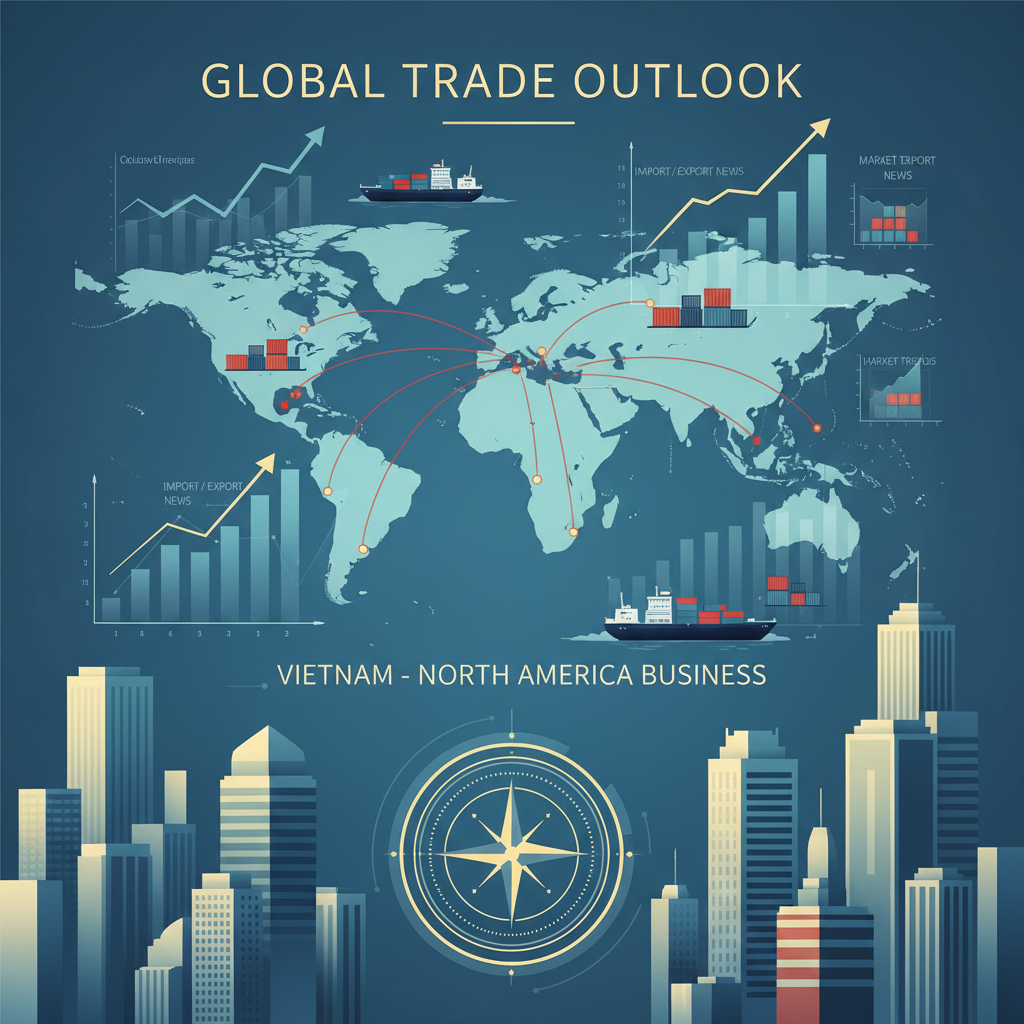
Navigating Global Trade: Insights on Import/Export Trends and Vietnam's Growing Role
As international trade dynamics shift, understanding the intricacies of import/export trends, especially from emerging markets like Vietnam, becomes crucial for trade professionals. This post delves into recent developments impacting global trade, focusing on the implications for North America and the notable trade activities of Vietnam.
Navigating Global Trade: Insights on Import/Export Trends and Vietnam's Growing Role
As international trade dynamics evolve, it has become critical for trade professionals to stay abreast of the latest trends and activities shaping the landscape. From the widening trade deficit in the United States to Vietnam's increasing trade surplus with established economies like the U.S., several factors are influencing global trade today. This blog post aims to unpack recent insights into import/export trends, explore Vietnam's burgeoning trade activities, and analyze their implications for North American trade relations.
Global Import/Export Trends
Recent analysis by Kiplinger unveiled a notable widening of the U.S. trade deficit, which expanded to $60.3 billion in March 2026 due to an aggressive uptick in imports that outpaced export growth. This trend can markedly affect the GDP, posing challenges for policymakers and economists focused on stabilizing the economic landscape. The $8.7 billion surge in imports overshadowed a modest $6.2 billion rise in exports, indicating a vital imbalance that could affect consumer prices and domestic production.
Moreover, while the overall trade deficit for Q1 2026 was reported at 55% smaller than that for the same period in 2025, the recent figures raise flags about sustainability and growth. Professionals should be vigilant and prepare for potential shifts in trade policies or tariffs that may come into play as the government seeks to rectify imbalances.
These circumstances underscore a critical need for companies to strategize their sourcing and purchasing effectively, focusing not only on cost efficiency but also on establishing diversified supply chains. As foreign markets become increasingly competitive, there is urgency in assessing purchasing habits that could leverage better terms from suppliers.
Vietnam's Trade Activities: A Surplus to Watch
Vietnam's trade landscape has shown remarkable resilience and growth in recent months. In January 2026, the country recorded an astounding trade surplus of $19 billion with the United States, surpassing both Mexico and China. The surge in exports—up 53% to exceed $20 billion—demonstrates Vietnam's escalating role as a significant player in global trade.
A noteworthy factor here is Vietnam's strategic emphasis on its position in the Comprehensive and Progressive Agreement for Trans-Pacific Partnership (CPTPP), a trade agreement that has opened new avenues for strengthening trade relations. Recently, Canada's Minister of International Trade, Maninder Sidhu, announced plans to visit Vietnam to fortify trade ties.
As Vietnam continues to boost its export capabilities, U.S. importers should consider diversifying their supply chains by including Vietnamese products, particularly in tech and apparel sectors, where Vietnam has become increasingly competitive. This emerging trend presents an opportunity for U.S. businesses to capitalize on lower production costs while benefiting from the nation’s expanding manufacturing capabilities.
Furthermore, the shift of key supply chains from China to Vietnam highlights the necessity for strategic adaptability. As U.S. imports from China have decreased by 46% in January 2026, assessing the dynamics of suppliers not just geographically but also in terms of operational efficiency and reliability becomes critical.
North American Trade Insights
Turning to North America, recent statements by former President Donald Trump expressing reluctance about the continuation of the U.S.-Mexico-Canada Agreement (USMCA) add a layer of uncertainty. A joint review due on July 1 could lead to significant changes in existing trade arrangements, which would be consequential for businesses operating across these borders.
The USMCA was designed to optimize trade, but discontent among stakeholders could spark alterations in tariffs, regulations, and overall trade costs. Companies need to prepare for potential shifts in trade policies that may arise from the upcoming review, emphasizing the importance of staying informed and adaptable.
Moreover, the recent agreement between Canada and Germany to export liquefied natural gas is indicative of a broader strategy to diversify trade relationships beyond the United States. This agreement not only enhances Canada’s energy exports but also highlights how nations are strategically pursuing partnerships outside traditional relationships.
Trade professionals should closely monitor these developments as they navigate their strategies for entering or expanding in various markets. The focus on diversifying trade partnerships may yield long-term benefits as companies hedge against potential uncertainties in their key markets.
Key News Sources
- Trump says he "would rather not have" his North American trade deal - Axios, June 17, 2026
- Minister Sidhu to visit Singapore and Vietnam to diversify Canada’s trade and attract new investments - Global Affairs Canada, February 6, 2026
- Canada and Germany make liquefied natural gas deal as Carney looks to diversify from US - Associated Press, June 1, 2026
- Kiplinger Trade Outlook: Trade Deficit Widens as Surging Imports Outpace Petroleum and Gold Export Gains - Kiplinger, June 12, 2026
- Vietnam records world-highest trade surplus with US, surpassing Mexico, China - South China Morning Post, March 13, 2026
Conclusion
In conclusion, navigating the current complexities of international trade requires a nuanced understanding of emerging trends, particularly as they relate to the balance of trade in North America and the innovative capacities of countries like Vietnam. As trade dynamics continue to shift, staying informed and prepared will be essential for professionals tasked with steering their organizations through the evolving landscape. Adaptability and strategic foresight will be key in leveraging opportunities in this competitive global environment.
Key News Sources
-
Trump says he "would rather not have" his North American trade deal (Axios) Former President Donald Trump expressed reluctance toward continuing the U.S.-Mexico-Canada Agreement (USMCA), suggesting he "would rather not have" the trade deal. This statement raises concerns over the upcoming joint review scheduled for July 1, which will determine whether the agreement will be extended for another 16 years.
-
Minister Sidhu to visit Singapore and Vietnam to diversify Canada’s trade and attract new investments (Global Affairs Canada) Canada's Minister of International Trade, Maninder Sidhu, announced plans to visit Singapore and Vietnam to advance Canada's trade ties with these key partners in the Comprehensive and Progressive Agreement for Trans-Pacific Partnership (CPTPP). The visit aims to promote the agreement and support Vietnam's priorities as the 2026 CPTPP Commission Chair.
-
Canada and Germany make liquefied natural gas deal as Carney looks to diversify from US (Associated Press) Canada has reached an agreement to export up to 1 million metric tons of liquefied natural gas (LNG) annually to Germany through the planned KSI Lisims LNG export terminal on British Columbia’s Pacific Coast. This deal is part of Prime Minister Mark Carney's strategy to diversify trade beyond the U.S.
-
Kiplinger Trade Outlook: Trade Deficit Widens as Surging Imports Outpace Petroleum and Gold Export Gains (Kiplinger) In March 2026, the U.S. trade deficit widened to $60.3 billion, driven by an $8.7 billion increase in imports, which outpaced a $6.2 billion rise in exports. This trend could negatively impact Q1 GDP growth, despite the overall trade deficit for the first quarter being 55% smaller than the same period in 2025.
-
Vietnam records world-highest trade surplus with US, surpassing Mexico, China (South China Morning Post) Vietnam's trade surplus with the United States reached $19 billion in January, surpassing both Mexico and China. Exports to the U.S. rose 53% to exceed $20 billion, while U.S. imports from China in the same period dropped by 46%.
Last updated: June 22, 2026