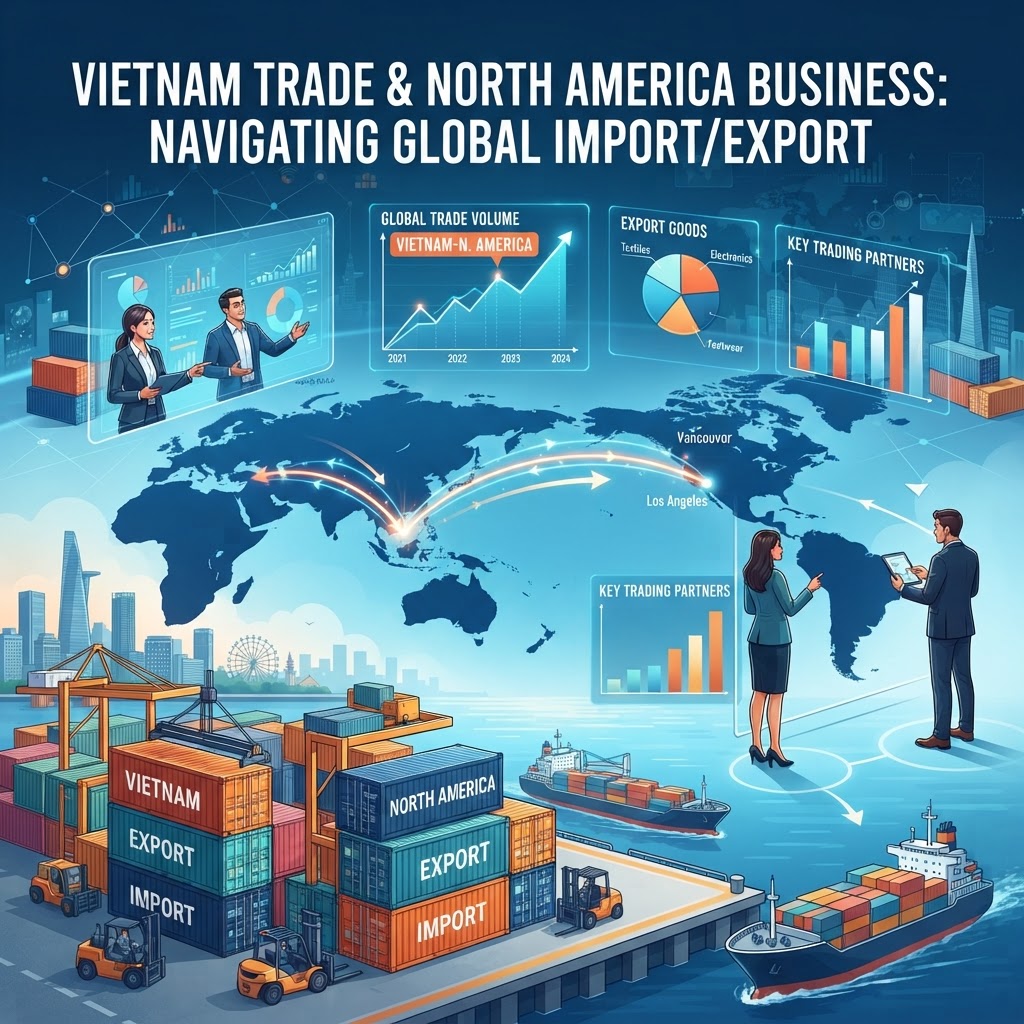
Navigating the Evolving Landscape of Global Trade in Q3 2026
An analytical look at record-breaking U.S. import volumes, Vietnam's robust manufacturing expansion, and the shifting regulatory landscape of the North American trade bloc.
As we move into the second half of 2026, the global trade environment is defined by strategic maneuvering, rapid industrial growth, and regulatory friction. For supply chain professionals and trade analysts, this period marks a critical juncture where pre-emptive stockpiling, regional manufacturing pivots, and diplomatic realignments are redrawing the logistics map. Understanding these dynamics is essential for mitigating risk and capitalizing on emerging bilateral opportunities. ### The US Import Surge and Pre-Tariff Realities The United States is currently experiencing a historic spike in import volumes as retailers and manufacturers accelerate procurement strategies. Driven by impending tariff concerns—specifically regarding labor standards—the market is seeing a massive front-loading of shipments. While these record-breaking July figures reflect a healthy appetite for consumer goods and materials, they also serve as a warning. Historically, such volume spikes are followed by a sharp normalization phase. Businesses should prepare for potential warehouse capacity constraints in the short term, followed by a possible demand lull as inventory levels stabilize in the late summer and early autumn. ### Vietnam: A Manufacturing Powerhouse in Transition Vietnam’s trade performance remains a standout narrative in the global economy, with a significant 27.1% increase in turnover during the first half of 2026. While a trade deficit has emerged, a deeper analysis reveals this is largely a function of industrial necessity; the nation is importing record volumes of machinery and raw materials to fuel its burgeoning manufacturing base. This shift signals that Vietnam is moving up the value chain, transitioning from a simple assembly hub to a more sophisticated industrial power. Furthermore, the diversification of its trade partnerships—evidenced by ongoing negotiations for an ASEAN-Canada Free Trade Agreement and robust promotional campaigns for U.S. agricultural products—positions Vietnam as a resilient node in the global supply chain, less dependent on a single market. ### North American Trade at a Crossroads North America faces a period of heightened uncertainty following the U.S. decision to decline a clean 16-year renewal of the USMCA. The shift toward a rolling annual review process introduces a new variable into corporate planning for the $2 trillion trade corridor. For companies operating across the U.S., Canada, and Mexico, the era of policy 'set and forget' is over. Compliance teams must now adapt to a more volatile regulatory environment where the threat of recurring reviews necessitates constant monitoring of bilateral trade policies. This transition requires increased agility in cross-border operations and a heightened focus on long-term government relations strategies to navigate potential policy pivots. ### Key News Sources 1. US Import Volumes: NRF Report 2. Vietnam Growth: Vietnam News 3. US-Vietnam Agriculture: U.S. Embassy & Consulate 4. Vietnam-Canada Trade: Vietnam Investment Review 5. USMCA Updates: White & Case Analysis ### Conclusion The current trade landscape offers a dichotomy of opportunity and risk. While Vietnam continues to strengthen its industrial foundation through strategic regional integration, the North American market is pivoting toward a more guarded, iterative review process. Meanwhile, U.S. importers remain caught in a cycle of tariff-driven volatility. To succeed in this climate, trade professionals must balance immediate inventory agility with a long-term strategy that accounts for the diversifying economic alliances in Asia and the tightening regulatory scrutiny in the West.
Key News Sources
-
US Import Volumes Poised for July Record Amid Pre-Tariff Stockpiling (National Retail Federation) U.S. container ports are projected to reach record-breaking import volumes in July 2026 as retailers accelerate shipments to stock up before expected new tariffs on forced labor take effect in August. While current import growth has been strong, analysts anticipate a potential pullback in volume starting in late summer as this front-loading activity eases.
-
Vietnam Records Strong Growth in First Half of 2026 (Vietnam News) Vietnam's total import-export turnover reached $549.69 billion in the first six months of 2026, marking a 27.1% increase compared to the previous year. Although imports grew faster than exports—leading to a $16.65 billion trade deficit—officials noted this largely reflects rising demand for raw materials and machinery to fuel domestic manufacturing.
-
U.S. and Vietnam Launch 'Great American Agriculture' Campaign (U.S. Embassy & Consulate in Vietnam) The U.S. Embassy and the USDA have partnered with MM Mega Market Vietnam to launch a nationwide promotion showcasing over 250 U.S. agricultural products. This initiative aims to expand consumer access to American food goods while strengthening the ongoing commercial partnership between the two nations.
-
Vietnam and Canada Advance Trade Cooperation Amid Regional Growth (Vietnam Investment Review) Vietnam and Canada are deepening their strategic trade partnership, with both countries expressing optimism that negotiations for the ASEAN-Canada Free Trade Agreement will conclude within 2026. Bilateral efforts are currently focused on boosting supply chain resilience and expanding cooperation in the green economy and infrastructure sectors.
-
U.S. Declines to Renew USMCA in Current Form, Triggering Annual Reviews (White & Case) The United States has declined to grant a clean 16-year renewal of the USMCA at its six-year review deadline, opting instead to continue bilateral negotiations. While the agreement remains in force, this decision initiates a rolling annual review process that adds uncertainty to the $2 trillion North American trade relationship.
Last updated: July 13, 2026