Navigating a Volatile Global Trade Landscape in Q3 2026
From record-breaking growth in Vietnam to escalating protectionism in North America, we analyze the shifting dynamics of the global trade environment in 2026.
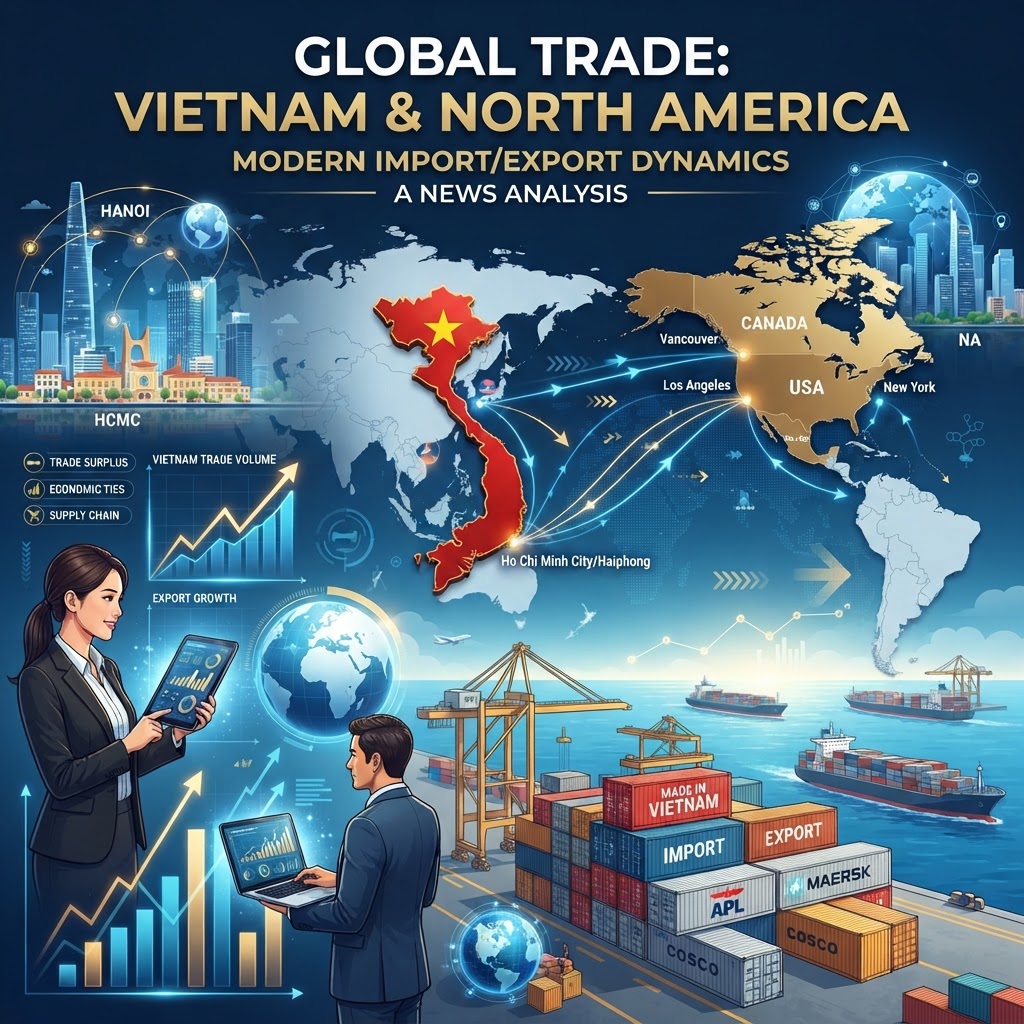
The global trade landscape in mid-2026 is characterized by a complex duality: while the raw value of trade continues to climb, the underlying drivers are increasingly fragile. As trade professionals, navigating this environment requires a nuanced understanding of the forces pushing prices upward, even as actual trade volumes struggle to match the pace of nominal valuation. This report explores the critical developments in the global market, with a spotlight on the emerging manufacturing powerhouse of Vietnam and the cooling relations between the United States and Canada. Global trade is currently defying expectations, reaching US$13.7 trillion in the first half of 2026—a 12.5% increase year-over-year. However, stakeholders must look beyond the topline figures. This growth is heavily influenced by systemic shipping disruptions in the Strait of Hormuz and a relentless climb in energy costs. For companies, this means that while revenue might appear to be growing, inflation and supply chain volatility are effectively eroding margins. Supply chain managers should prioritize diversifying logistics routes and hedging against energy-driven transportation spikes to mitigate these pressures. Vietnam’s economic trajectory remains a focal point of global trade policy. As the nation races toward a landmark $1 trillion total import-export turnover for 2026, it is simultaneously grappling with a $13.8 billion import surplus driven by massive capital investment in machinery. While this signifies a robust move toward industrial modernization, it has also complicated trade relations with the United States. With a $75.3 billion trade deficit with the U.S. in the first half of the year, Vietnam is now under immense pressure to navigate ongoing trade investigations. For businesses operating in the Vietnam-U.S. corridor, the priority must be regulatory compliance and active participation in trade dialogues to anticipate potential tariffs before they are implemented. In North America, the mood has shifted from cooperation to confrontation. The U.S. government's decision to impose 50% tariffs on $20 billion worth of Canadian goods—targeting sectors from dairy to furniture—marks a significant departure from recent bilateral trade norms. This aggressive posture signals that the 'America First' trade philosophy remains a potent force in domestic policy, regardless of historical ties. Businesses integrated into U.S.-Canada supply chains should immediately conduct tariff exposure audits and explore contingency sourcing to shield themselves from these sudden cost escalations. The takeaway for the remainder of 2026 is clear: market intelligence and flexibility are paramount. As regional tensions rise and global costs inflate, firms that can adapt their procurement strategies while remaining closely aligned with shifting regulatory environments will be the ones that succeed. Key News Sources: Global trade update (July/August 2026) (https://unctad.org/publication/global-trade-update-julyaugust-2026-global-trade-continues-expand-amid-rising-price); Vietnam on track to top $1 trillion in trade for first time (https://vir.com.vn/vietnam-on-track-to-top-1-trillion-in-trade-for-first-time-155046.html); Vietnam Reaffirms Trade Talks, Urges US to Conclude Trade Investigation (https://www.usnews.com/news/top-news/articles/2026-07-23/vietnam-reaffirms-trade-talks-urges-us-to-conclude-trade-investigation); US imposes new 50% tariffs on $20 billion worth of Canadian products (https://www.reuters.com/business/us-imposes-new-50-tariffs-canadian-products-2026-07-20). In conclusion, the trade environment of 2026 is one where nominal gains mask deeper structural challenges. Whether it is the inflationary impact of transit bottlenecks or the sudden volatility introduced by new tariffs, trade leaders must move away from 'business as usual' and toward a proactive, resilience-focused strategy. By staying informed and agile, organizations can navigate these turbulent waters and maintain their competitive edge.
Key News Sources
-
Global trade update (July/August 2026): Global trade continues to expand amid rising price pressures (UN Trade and Development (UNCTAD)) Global goods trade reached approximately US$13.7 trillion in the first half of 2026, marking a 12.5% increase from the previous year. However, much of this growth is attributed to higher prices caused by shipping disruptions in the Strait of Hormuz and rising energy costs rather than increased trade volumes.
-
Vietnam on track to top $1 trillion in trade for first time (Vietnam Investment Review) Vietnam's total import-export turnover reached approximately $445 billion in the first five months of 2026, putting the country on track to surpass the $1 trillion milestone for the year. While exports remain a primary driver of economic growth, the country also recorded an import surplus of $13.8 billion, largely due to increased procurement of machinery and raw materials for production.
-
Vietnam Reaffirms Trade Talks, Urges US to Conclude Trade Investigation (U.S. News & World Report) Vietnam is seeking to resolve ongoing trade investigations as its trade deficit with the U.S. climbed to $75.3 billion in the first half of 2026, a 21% annual increase. Despite previous tariff threats and trade barriers, the U.S. remains Vietnam's largest export market, with exports to the U.S. reaching nearly $70 billion in the first five months of 2026 alone.
-
US imposes new 50% tariffs on $20 billion worth of Canadian products (Reuters) The United States has announced new 50% tariffs on $20 billion worth of Canadian goods, including dairy products, furniture, and clothing. These measures are set to take effect within 30 days, marking a significant escalation in trade tensions between the two nations.
Last updated: July 29, 2026