Navigating Shifting Trade Landscapes: Vietnam, North America, and the Evolution of Import Policy
An analysis of the intensifying trade pressures facing Vietnam, the tightening regulatory environment for forced labor in North America, and what these developments mean for global supply chain strategy.
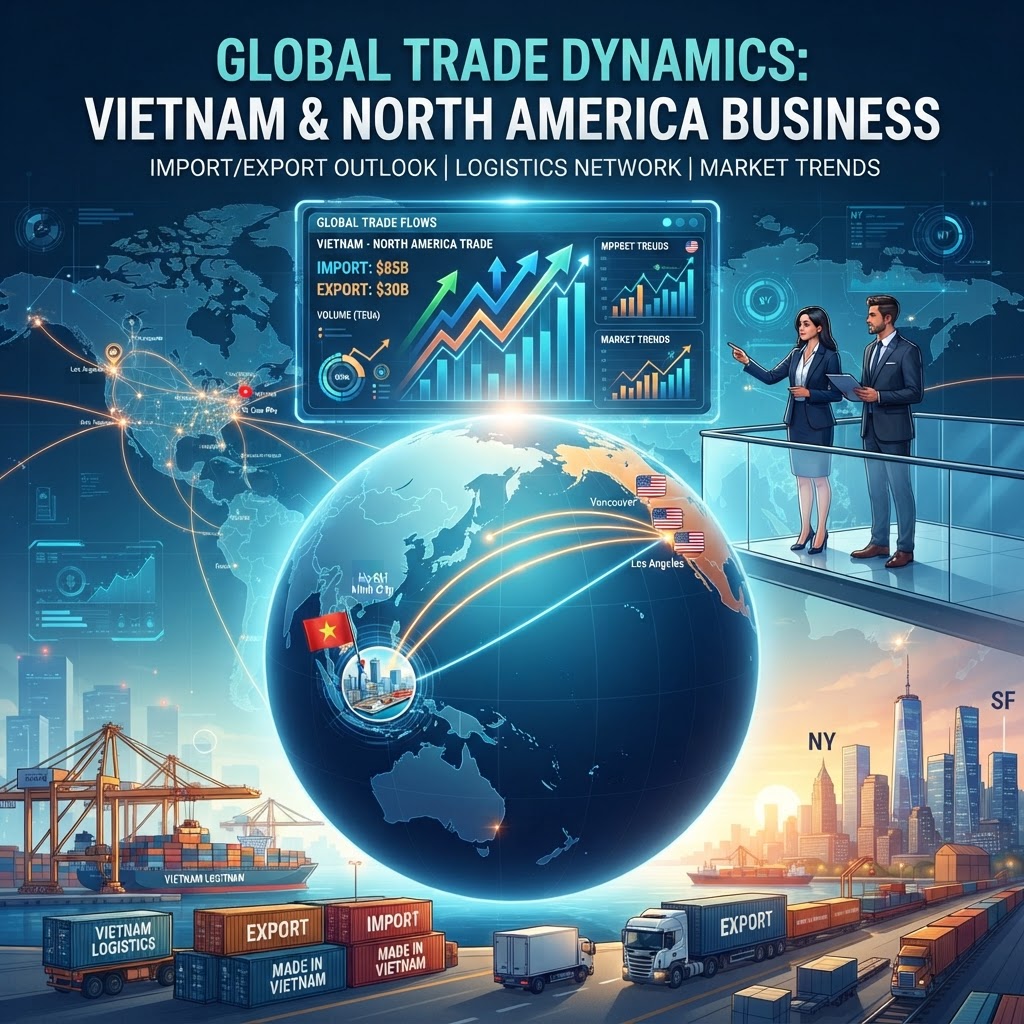
The global trade environment is undergoing a period of profound restructuring, characterized by heightened scrutiny of supply chain integrity and the aggressive use of tariffs as a primary diplomatic tool. For trade professionals and multinational corporations, the current landscape requires a sophisticated approach to risk management, particularly as traditional manufacturing hubs like Vietnam face new, steep tariff barriers and North American partners face increased pressure to tighten their border enforcement mechanisms. This shifting terrain suggests that the era of unfettered global trade is being replaced by one defined by geopolitical alignment and regulatory compliance. # The Vietnam Trade Challenge: Balancing Growth and Geopolitics Vietnam has emerged as a premier manufacturing powerhouse over the last decade, with its export sector becoming the primary engine of its economic growth. By 2023, exports accounted for nearly 90% of the nation's GDP. However, this reliance on global trade has rendered the country uniquely vulnerable to shifts in U.S. trade policy. Recent rhetoric regarding a 20% tariff on Vietnamese exports, paired with a potential 40% levy on trans-shipped goods, poses a significant threat to Vietnam’s competitive edge. The uncertainty surrounding these trade investigations has forced the Vietnamese government into a delicate balancing act. While the foreign ministry continues to reaffirm its commitment to trade dialogues, the pressure to maintain market access in the U.S. remains high. Companies sourcing from Vietnam should proactively audit their supply chains for potential trans-shipment risks and ensure full transparency in their manufacturing origins to mitigate the impact of impending levies. # Strengthening North American Regulatory Compliance While Southeast Asia grapples with tariff risks, North American trade policy is evolving toward a more enforcement-heavy model. The U.S. Trade Representative has taken a firm stance against trading partners failing to curb forced labor, recently identifying Canada among a list of sixty nations with insufficient enforcement measures. In response, Canada has signaled an intent to pivot, with new legislative frameworks expected to bolster their import regime. For professionals operating within the US-Canada corridor, these changes indicate that passive compliance is no longer sufficient. Importers must move toward robust traceability and environmental, social, and governance (ESG) reporting to avoid being caught in the crosshairs of these new, strict border enforcement measures. # Key News Sources - Vietnam Reaffirms Trade Talks, Urges US to Conclude Trade Investigation (https://www.usnews.com/news/top-news/articles/2026-07-23/vietnam-reaffirms-trade-talks-urges-us-to-conclude-trade-investigation) - Canada Signals Stronger Forced Labour Import Measures Following New U.S. Tariff Threat (https://www.mccarthy.ca/en/insights/blogs/terms-trade/canada-signals-stronger-forced-labour-import-measures-following-new-u-s-tariff-threat) - Trump says he will put 20% tariff on Vietnam's exports (https://www.reuters.com/world/asia-pacific/trump-says-he-has-struck-trade-deal-with-vietnam-2025-07-02/) - Vietnam has been a big beneficiary of global trade — Trump’s new tariffs threaten to derail that (https://www.nbcbayarea.com/news/business/money-report/vietnam-has-been-a-big-beneficiary-of-global-trade-trumps-new-tariffs-threaten-to-derail-that/3838864/?amp=1) # Conclusion The intersection of increased protectionism in the United States and the regulatory hardening of labor standards in Canada creates a complex matrix for global trade professionals. As Vietnam seeks to maintain its role as a manufacturing pivot point despite mounting tariff threats, and North American nations prioritize rigorous import enforcement, the margin for error in supply chain management continues to shrink. Success in this environment will belong to those who prioritize absolute transparency, invest in deep-tier supply chain visibility, and remain agile enough to pivot in response to rapid changes in international trade policy.
Key News Sources
-
Vietnam Reaffirms Trade Talks, Urges US to Conclude Trade Investigation (U.S. News & World Report) Vietnam's foreign ministry has reaffirmed its commitment to ongoing trade negotiations with the United States. The country is actively urging the U.S. to conclude its current trade investigation.
-
Canada Signals Stronger Forced Labour Import Measures Following New U.S. Tariff Threat (McCarthy Tétrault) The U.S. Trade Representative recently identified Canada as one of sixty trading partners failing to effectively enforce bans on goods produced with forced labour. In response, Canada has signaled it will introduce new legislation to strengthen its import enforcement regime.
-
Trump says he will put 20% tariff on Vietnam's exports (Reuters) Former President Trump announced plans to impose a 20% tariff on Vietnamese goods. Additionally, he stated that trans-shipments from third countries routed through Vietnam would face a 40% levy.
-
Vietnam has been a big beneficiary of global trade — Trump’s new tariffs threaten to derail that (NBC Bay Area) Vietnam has historically benefited from global trade, with exports accounting for nearly 90% of its GDP in 2023. However, new U.S. tariffs threaten to significantly impact this growth and disrupt the country's role as a manufacturing hub.
Last updated: July 30, 2026