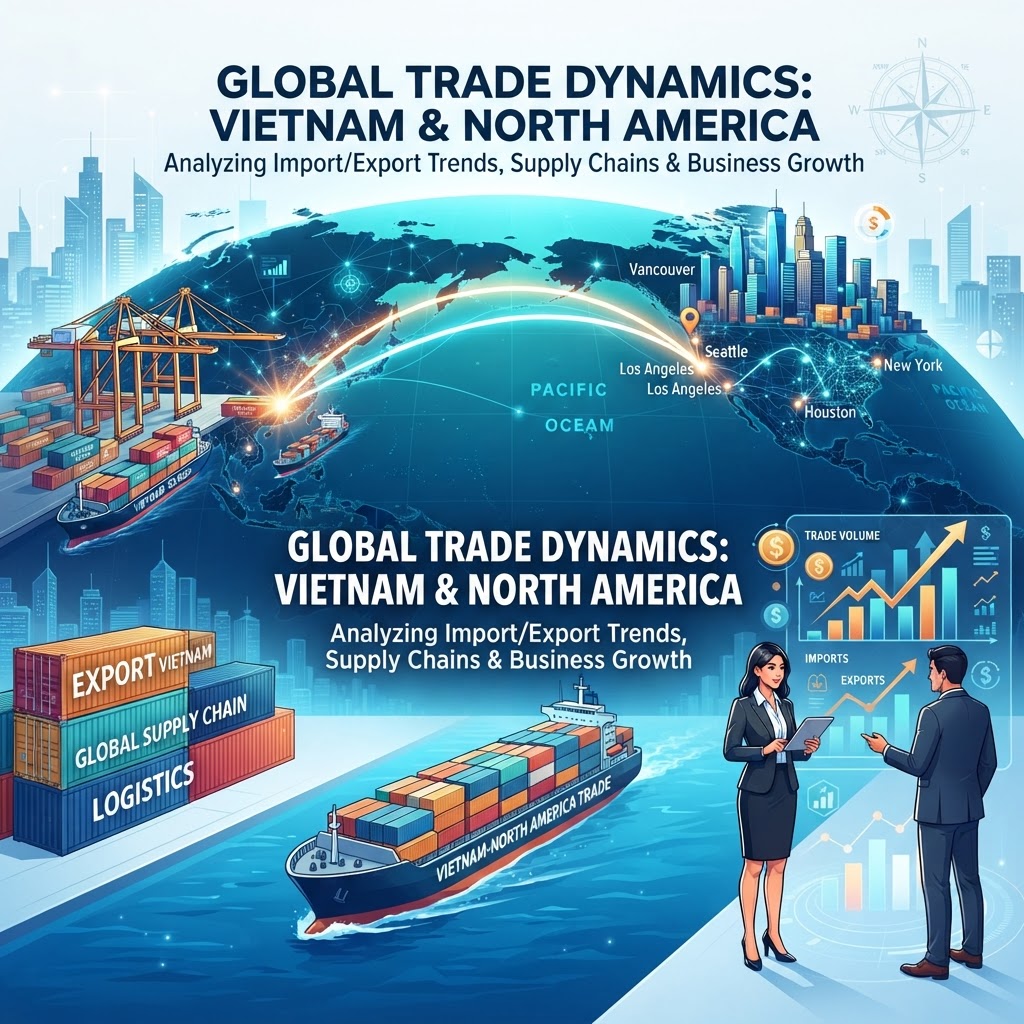
Navigating the New Era: Global Trade Shifts and the Rise of Vietnam
A comprehensive look at the shifting tides of international trade in 2026, focusing on the rise of Vietnam, new tariff landscapes, and the evolving economic outlook.
The global trade landscape in 2026 is defined by a complex interplay of geopolitical tensions, technological transformation, and evolving regulatory environments. For international trade professionals, the current environment presents both a significant challenge and a notable opportunity. As the IMF projects steady, if measured, growth in the coming years, the underlying mechanics of global commerce are being reshaped by forced-labour initiatives, judicial interventions, and strategic pivots by manufacturing hubs. Understanding these currents is no longer optional; it is a prerequisite for maintaining competitive resilience. At the heart of this transformation is Vietnam, a nation that has skillfully navigated trade disputes to become a pivotal player in the North American supply chain, even as it balances the weight of new global tariff requirements. As we enter the second half of 2026, the convergence of these factors suggests that traditional trade routes are being fundamentally redrawn, necessitating a more agile approach to supply chain strategy and regulatory compliance. The latest economic data indicates a bifurcated global recovery. While energy-importing nations grapple with the lingering consequences of ongoing war, countries that have successfully integrated into the high-technology value chain are seeing robust growth, largely fueled by surging demand for artificial intelligence. However, this growth occurs against a backdrop of intensified trade measures. The implementation of Section 301 tariffs across 60 economies on July 24, 2026, marks a significant shift in the global regulatory framework. With duties reaching up to 12.5 percent, businesses must conduct an immediate audit of their import portfolios to mitigate the impact of these additional costs. Vietnam’s trajectory remains a compelling case study in modern trade resilience. Despite facing higher effective tariff rates than many of its competitors, Vietnam has successfully positioned itself as an indispensable source of U.S. imports, now standing on the precipice of overtaking Canada in this metric. This ascent is occurring simultaneously with Vietnam’s proactive engagement in ongoing trade investigations with the United States. For firms operating in this space, the imperative is clear: the volatility of trade relations does not equate to a cessation of opportunity. Instead, it requires deep integration and, in some cases, the utilization of alternative regional gateways. For example, Vietnam’s strategy of leveraging its position as a gateway to the ASEAN region has allowed it to deepen its economic ties with North American partners like Canada, with bilateral trade figures demonstrating consistent upward momentum. The judicial landscape also continues to be a major factor in trade planning. The U.S. Supreme Court’s decision to strike down specific reciprocal tariffs under the International Emergency Economic Powers Act (IEEPA) has provided a degree of clarity for businesses, reinforcing the necessity of monitoring domestic legal shifts with the same intensity as international trade policy. This ruling highlights that, even in an era of executive-led trade actions, the judiciary remains a critical check on policy, providing potential avenues for relief or at least more predictable long-term planning. For trade professionals, the takeaway is twofold. First, the dependency on singular sourcing strategies is increasingly risky. Second, regulatory intelligence must be integrated into the strategic decision-making process at the executive level. Key News Sources: IMF World Economic Outlook Update (https://www.imf.org/en/publications/weo/issues/2026/07/08/world-economic-outlook-update-july-2026), Global Trade Alert Section 301 Overview (https://globaltradealert.org/), US News report on Vietnam-US Trade Talks (https://www.usnews.com/news/top-news/articles/2026-07-23/vietnam-reaffirms-trade-talks-urges-us-to-conclude-trade-investigation), The Globe and Mail on Vietnam-US Import Dynamics (https://www.theglobeandmail.com/business/article-vietnam-canada-source-us-imports-trade-tariffs-economy/), Vietnam Briefing on Vietnam-Canada Trade (https://www.vietnam-briefing.com/news/vietnam-canada-trade-future-post-trudeau-navigating-key-dynamics.html/), and Vietnam Briefing on Supreme Court Tariffs (https://www.vietnam-briefing.com/news/us-supreme-court-blocks-trumps-tariffs-implications-for-vietnam-us-trade.html/). In conclusion, while the global economy faces structural headwinds, the strategic pivot toward high-value manufacturing and regional trade blocs offers a roadmap for sustained success. Professionals must monitor the evolving Section 301 landscape and the ongoing U.S.-Vietnam trade negotiations closely. By remaining informed and adaptable, businesses can transform these regulatory and geopolitical challenges into competitive advantages.
Key News Sources
-
World Economic Outlook Update, July 2026: Global Economy in Crosscurrents of War and Technology (International Monetary Fund) Global economic growth is projected to reach 3.0 percent in 2026 and 3.4 percent in 2027. While the war shock continues to impact energy importers, countries integrated into the global technology value chain are seeing growth driven by AI demand.
-
Forced-Labour Section 301 Tariffs on 60 Economies Take Effect on 24 July: An Overview of the Final Action (Global Trade Alert) New trade measures have been implemented, with additional duties of 10% or 12.5% now applying to imports from 60 different economies. This action follows the lapse of Section 122 and the introduction of new Section 301 duties.
-
Vietnam Reaffirms Trade Talks, Urges US to Conclude Trade Investigation (US News) Vietnam's foreign ministry has expressed its continued commitment to ongoing trade negotiations. The country is actively urging the United States to bring a current trade investigation to a conclusion.
-
Vietnam is on track to overtake Canada as a source of U.S. imports (The Globe and Mail) Vietnam has emerged as a significant winner in recent trade disputes, positioning itself to surpass Canada as a primary source of U.S. imports. This shift is occurring despite Vietnam facing effective tariff rates that are significantly higher than those applied to Canada.
-
Vietnam-Canada Trade Future Post-Trudeau: Navigating Key Dynamics (Vietnam Briefing) Vietnam has become a key destination for Canada's export expansion strategy, serving as a gateway to the ASEAN region. In 2024, bilateral trade reached new heights, with Vietnam's exports to Canada exceeding $10 billion for the first time.
-
US Supreme Court Blocks Trump's Tariffs: Implications for Vietnam–US Trade and Businesses (Vietnam Briefing) The U.S. Supreme Court ruled that reciprocal tariffs imposed under the IEEPA were unlawful, significantly altering the legal framework for trade. This decision has major implications for how businesses manage trade relations between the U.S. and its partners, including Vietnam.
Last updated: July 31, 2026