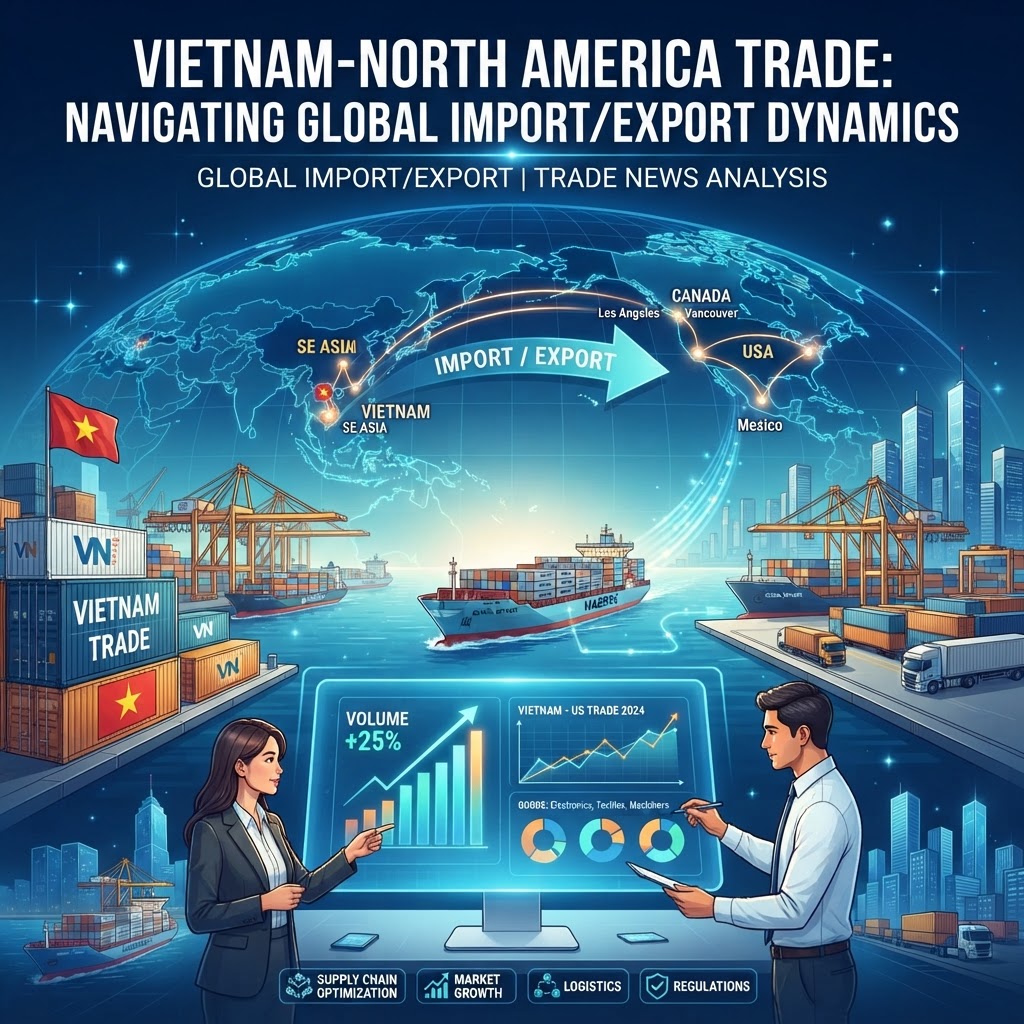
Navigating Global Trade Volatility: Summer 2026 Insights
An analysis of the current state of global trade, focusing on inflationary pressures, US-Vietnam relations, and the mounting tension in North American trade negotiations.
The global trade landscape in mid-2026 is defined by a paradoxical blend of robust nominal growth and underlying structural volatility. While total trade values are climbing, industry leaders must distinguish between genuine expansion and inflationary distortions driven by rising logistics and energy costs. Simultaneously, bilateral trade dynamics, particularly involving the United States, are entering a critical phase of realignment. As trade professionals, navigating this environment requires a nuanced understanding of both macroeconomic trends and specific diplomatic friction points that threaten supply chain stability. Global trade reached approximately US$13.7 trillion in the first half of 2026, representing a significant 12.5% increase year-over-year. However, caution is advised: this uptick is heavily influenced by price inflation in energy and shipping, rather than an increase in physical trade volume. For logistics managers and procurement heads, this indicates that while revenue figures may look promising, margins remain under pressure. It is essential to re-evaluate vendor contracts and logistics cost structures to account for these systemic price increases. The US-Vietnam corridor remains a focal point for manufacturing diversification, though it is not without its administrative hurdles. Vietnam is currently pushing for the resolution of ongoing trade investigations by the United States, signaling a desire to formalize stronger ties and reduce regulatory uncertainty. For businesses looking to optimize their Asian supply chains, the ongoing negotiations suggest that Vietnam is prioritizing long-term stability with the US. Monitoring the conclusion of these investigations is vital for firms looking to leverage Vietnam as a key node in their supply chain. North America is currently the epicenter of trade tension, particularly regarding the US-Canada relationship. With an August 19 deadline looming, the atmosphere has turned acrimonious following US proposals for 50% tariffs on select Canadian goods. Canada’s firm response and threats of retaliation highlight a deteriorating environment for cross-border operations. Businesses reliant on integrated North American supply chains must develop robust contingency plans, including diversifying sourcing channels and evaluating the potential impact of retaliatory tariffs on their operating costs. Key News Sources: Global Trade Update (July/August 2026), Vietnam urges US to conclude investigation, Canada-US Tariff Negotiations, Canada’s Tougher Stance. In conclusion, the current trade climate demands a proactive and defensive stance. The primary takeaway for trade professionals is that geopolitical negotiation risks are now as impactful as economic trends. Whether it is the inflationary nature of current volume growth or the immediate threat of high tariffs in North America, agility in logistics and legal compliance will be the defining factors for competitive advantage in the second half of 2026.
Key News Sources
-
Global Trade Update (July/August 2026): Global trade continues to expand amid rising price pressures (UN Trade and Development (UNCTAD)) Global goods trade reached approximately US$13.7 trillion in the first half of 2026, marking a 12.5% increase from the previous year. However, much of this growth is attributed to higher prices for energy and logistics rather than increased trade volumes.
-
Vietnam reaffirms trade talks, urges US to conclude trade investigation (Reuters) Vietnam's foreign ministry has expressed its continued commitment to finalizing trade negotiations with the United States. The country is actively urging the U.S. to bring ongoing trade investigations to a conclusion.
-
Canada Takes Tougher Stance as Trade Deadline with U.S. Approaches (RFD) Canada is adopting a firmer negotiating position as the August 19 deadline for trade talks with the United States approaches. Leaders are currently engaged in high-stakes negotiations regarding potential new tariffs.
-
Canada and US to intensify talks over trade deal (The Arkansas Democrat-Gazette) The U.S. has proposed new 50% tariffs on certain Canadian goods, prompting an intensification of trade negotiations between the two nations. Canadian officials have criticized the move, warning of potential economic instability and retaliatory measures.
Last updated: August 8, 2026