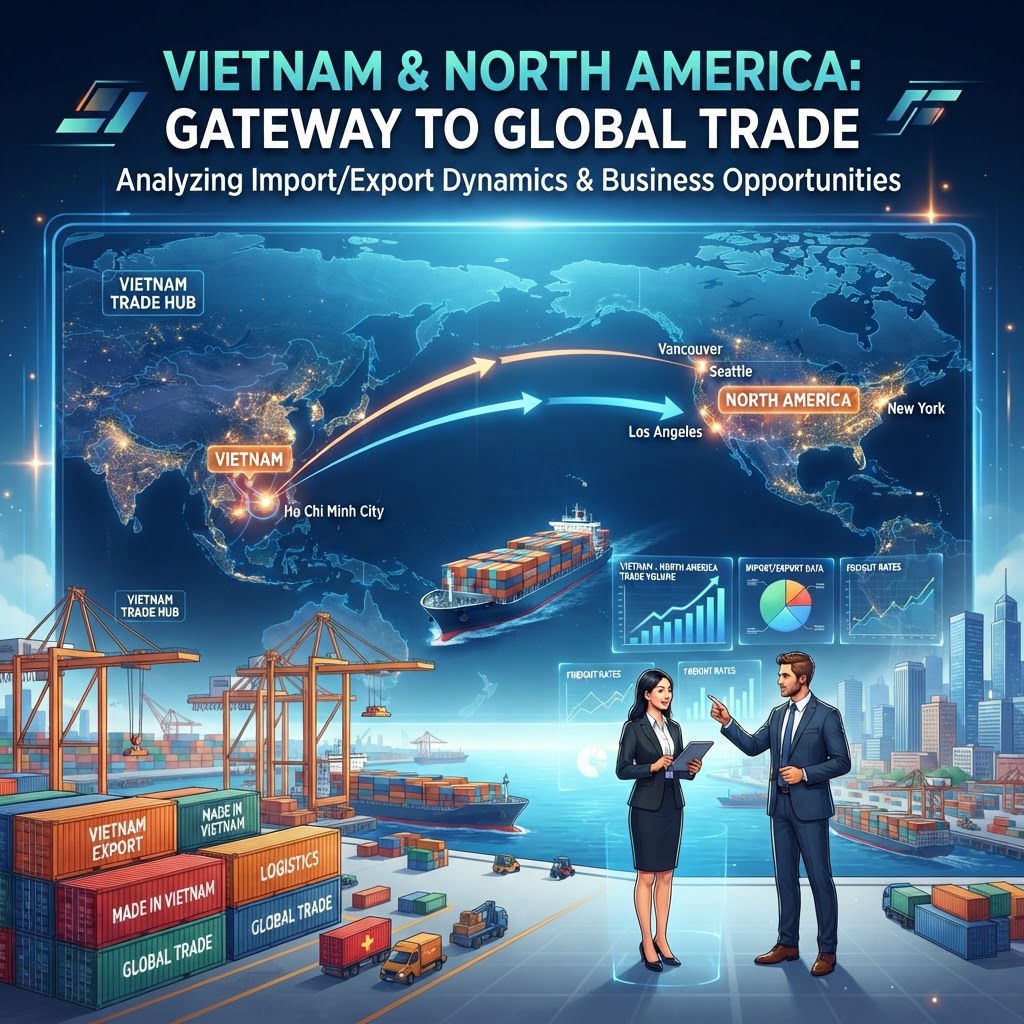
Navigating the Shifting Tides of Global Trade: Mid-2026 Analysis
A deep dive into the expanding global goods market, Vietnam's strategic economic position, and the escalating trade tensions currently reshaping the North American landscape.
The global trade landscape in mid-2026 is defined by a paradoxical mix of robust expansion and localized friction. As supply chains continue to stabilize and post-pandemic patterns solidify, trade professionals are navigating a complex environment where traditional trade routes are being challenged by new regulatory pressures and geopolitical maneuvering. Understanding these shifts is no longer optional—it is a requirement for maintaining a competitive edge in an increasingly volatile market. The first half of 2026 saw global goods trade reach US$13.7 trillion, a significant 12.5% increase year-on-year. While this recovery is encouraging, the growth remains uneven. East Asia is currently serving as the engine of global expansion, yet this momentum is encountering headwinds in the form of price pressures and shifting protectionist policies that threaten to disrupt the status quo. Vietnam has emerged as a focal point in this narrative, balancing explosive growth with the realities of navigating international trade barriers. Simultaneously, the North American corridor faces an urgent inflection point, with Canada-U.S. relations testing the limits of North American trade integration. This update provides an analysis of these critical trends to help trade stakeholders refine their strategies for the remainder of the year. Vietnam remains a critical hub in the global supply chain, boasting a total import-export turnover of $659.58 billion in the first seven months of 2026—a 28.1% year-on-year increase. However, this period has also highlighted internal vulnerabilities, as the country registered a $20.52 billion trade deficit due to heavy reliance on imported raw materials and industrial machinery. Furthermore, the external environment is becoming increasingly complex. On July 24, 2026, the U.S. implemented a 12.5% tariff on select Vietnamese exports under Section 301, citing forced labor concerns. While the semiconductor and electronics sectors have been spared, industries such as wood products and textiles face immediate margin pressure. Despite these headwinds, Vietnam is successfully diversifying its partner base; Canada, in particular, is leaning into Vietnam as a strategic gateway to the ASEAN market, signaling long-term potential for agricultural and industrial collaboration. While North American trade is often viewed through the lens of established cooperation, the current climate is marked by significant friction. Canada and the U.S. are currently deadlocked in negotiations, with the specter of 50% U.S. tariffs on Canadian goods looming over the market. These tensions center on long-standing disputes regarding dairy, alcohol, and existing tariffs on steel and aluminum. For professionals operating within these markets, the lack of a clear path forward necessitates a robust risk management strategy. Businesses must prepare for potential supply chain disruptions and volatile pricing as the August 19 deadline for these measures approaches. The takeaway is clear: the era of predictable, frictionless trade is being replaced by a more tactical, negotiated reality where policy adjustments can shift competitive landscapes overnight. Stakeholders should prioritize diversification of supplier sources and keep a close watch on regional regulatory developments to maintain agility. Key News Sources: Global Trade Continues to Expand Amid Rising Price Pressures (https://vertexaisearch.cloud.google.com/grounding-api-redirect/AUZIYQF9k8mWcs9K43GR36sPSlB6H3Wgu5MQ745ccd29knlw4l1rHoDT3aKnzbxyq1KqI1QebvnztPFq00RX4wp-N0UpdcnwixkMtWs3GWk5ICEXJNsL6pKIASxZ0AHloHgoEMYHYBDI3zIZNgM0VA1-DFLAnfTZiEJu04abYdjLHO9-M7vEGdFJSvjfEhefH7H6R9E9MNJMOfVO1ZYwlqf0SH8LMqXUGRpfEIsoZg_THQ==); Vietnam's trade turnover hits 659.58 bln USD in first 7 months of 2026 (https://vertexaisearch.cloud.google.com/grounding-api-redirect/AUZIYQEe7vezzTlMyCL4CWk4J5660UVBU0T2rNmbPlF7oTv151xyqhMaDWAlaWDD2Zj-e8k-W24cYZclA1-0W9glvstsoB9lSJj5KQgR6x0mACV_J265OrKsU6ACwuXGY8XA9MODSJ_ckAyLpswz5PRZ7CsP4nUQ7J-ISI41eAmc7wWt977cvw==); U.S. imposes new tariffs on Vietnamese exports (https://vertexaisearch.cloud.google.com/grounding-api-redirect/AUZIYQEZDqJaCLVHsQ5p2wKqC4qYBuwPbILTPmSWeG0oM82CfB7RcyyWosGGRisVvplYndUk7LUhSW-8fr-DAyAJA3jFXbtF-Br5qJTd7Qe46lJcIuGsHWzjF9DGKADd2pc4C8--3VCvJMMIsEZ8RS7Y7inFtnh03zg1cAgSh7i-f_u7cQpAerC3KVCb8mou2ifn3b8=); Vietnam seen as gateway for Canadian farm produce to ASEAN (https://vertexaisearch.cloud.google.com/grounding-api-redirect/AUZIYQGuzzBFV8Yb8CunoZ8SiRYY6ieY81ekqsQahhxYT5PdgwuBruIUQLqrvTuytpfnA_01M_zp1GVgNiQayz8EdtGoF00zik2hkcc5EJYrL4-VGK4uiBzxOf6h2HuC35nTdR1a1O0pAqObxZkt6Aqm6i7js8ISoLjnbuqUTptoh52Op6pds1R4ecSUB3tOsHE3pB4UCokZ0lxHkKB2r0upyw==); No major breakthrough in Canada-U.S. trade talks (https://vertexaisearch.cloud.google.com/grounding-api-redirect/AUZIYQH-MjYYNDioX1xL_OwFAM83yVfCSLt5dL1Qi2xGWgNgIJr2HxZl0qqKZKjXfMuZzy0WdGZlmVg8Q39BICfdHYeGG8GVNIjniyT5-YINPXHNvVnjv9We9gVPFgCV29Z5cyOxeMBqOwOqjv1OTCdwe9P3KWhdpUyO_x_hypLxNIPThq3B2jJ4i1RQLVY5JLq_BcPKjaKV6wI=). The remainder of 2026 will likely remain characterized by high-stakes negotiations and shifting trade alliances. Whether it is the integration of new Southeast Asian partnerships or the resolution of North American border disputes, the global trade community must remain vigilant. By leveraging diverse market insights and maintaining flexible supply chains, businesses can not only survive these turbulent times but potentially capitalize on the emerging opportunities in dynamic regions like Vietnam and beyond.
Key News Sources
-
Global Trade Continues to Expand Amid Rising Price Pressures (UNCTAD) Global goods trade reached approximately US$13.7 trillion in the first half of 2026, marking a 12.5% increase from the same period in 2025. While growth remains strong, it is uneven, with East Asia leading the expansion while other regions experience varied performance in import and export volumes.
-
Vietnam's trade turnover hits 659.58 bln USD in first 7 months of 2026 (NewsCN) Vietnam's total import-export turnover grew by 28.1% year-on-year to $659.58 billion in the first seven months of 2026. Despite this strong growth, the country recorded a trade deficit of $20.52 billion as imports, driven by demand for raw materials and machinery, continued to outpace exports.
-
U.S. imposes new tariffs on Vietnamese exports (Nhandan.vn) Effective July 24, 2026, the U.S. began imposing a 12.5% tariff on many Vietnamese goods under Section 301 policies related to forced labor concerns. While sectors like electronics and semiconductors remain exempt, domestic industries such as textiles and wood products are now facing increased competitive pressure.
-
Vietnam seen as gateway for Canadian farm produce to ASEAN (VietnamPlus) Canadian government and business leaders are increasingly viewing Vietnam as a strategic gateway for trade in Southeast Asia, particularly for agricultural products. Bilateral trade has shown strong growth, with Vietnam established as Canada’s largest trading partner within the ASEAN bloc.
-
No major breakthrough in Canada-U.S. trade talks (iPolitics) Canada and the U.S. remain far apart in negotiations aimed at avoiding new 50% U.S. tariffs on Canadian goods scheduled to take effect on August 19. Key sticking points include Canadian policies on dairy and alcohol, while Canada continues to seek relief from existing American tariffs on steel and aluminum.
Last updated: August 15, 2026