Navigating the 2026 Trade Landscape: Insights from Global and Regional Markets
A comprehensive analysis of the shifting global trade environment, examining the unique challenges faced by Vietnam and the evolving North American trade framework.
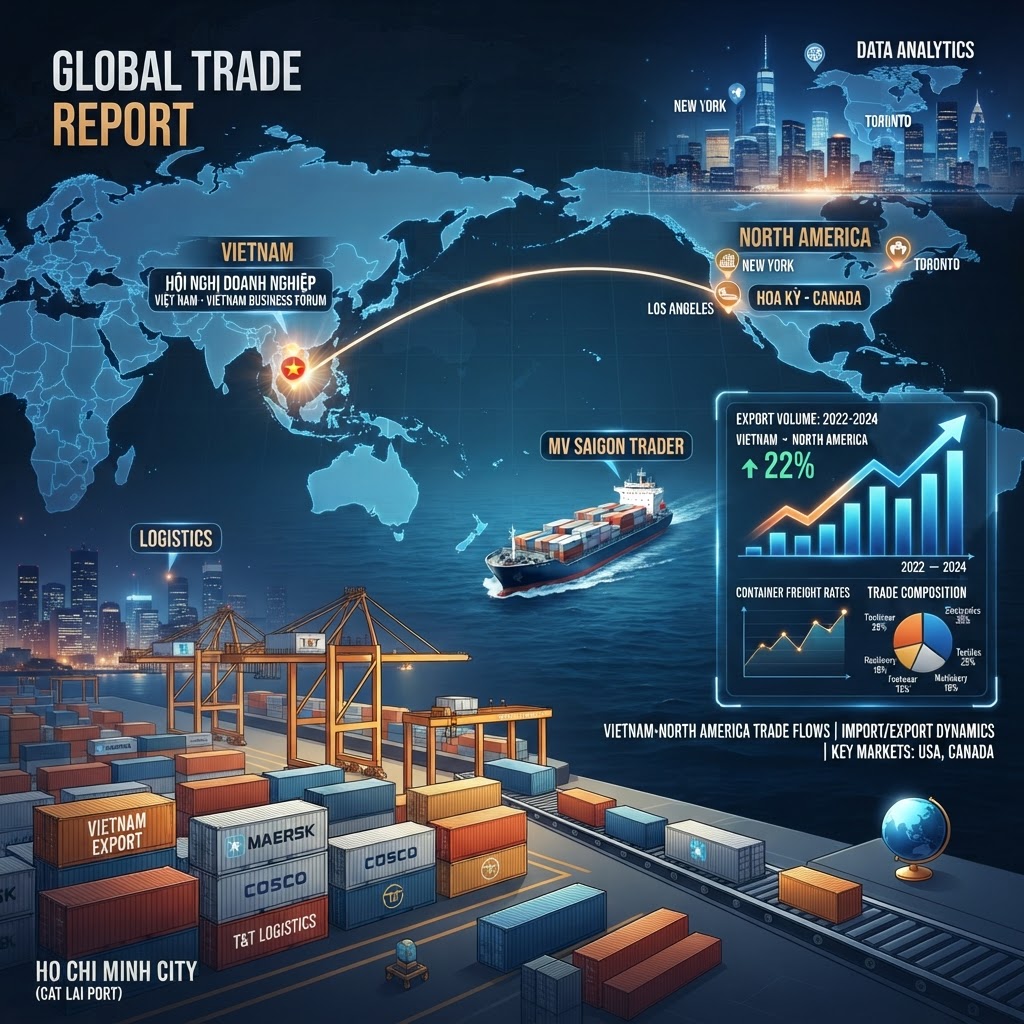
The global trade landscape in 2026 is defined by an intricate dance between resilience and volatility. Following a banner year in 2025 where trade volumes surged past $35 trillion, the current fiscal year reflects a more cautious environment characterized by slower growth and persistent geopolitical friction. As supply chains continue to evolve and nations prioritize digital and green transitions, trade professionals must adopt a more agile strategy to mitigate risks and capitalize on emerging corridors. In this edition, we analyze the shifting currents in Vietnam and the critical negotiations reshaping the North American market. Global trade is no longer just about the movement of goods; it is about navigating regulatory complexity and regional dependency. While global growth projections remain tempered, specific hotspots continue to demand attention. Vietnam, a linchpin of manufacturing, currently faces a complex trade deficit dilemma that reflects broader regional shifts. Simultaneously, in North America, the CUSMA framework remains the epicenter of high-stakes diplomacy as Canada attempts to balance tariff pressures with long-term stability. The first half of 2026 has been marked by significant volatility in Vietnam's trade balance. Having reported its largest trade deficit on record, the country is grappling with an unexpected surge in imports that complicates its export-oriented economic strategy. Despite this, the long-term outlook remains tethered to its robust relationship with the United States. With exports to the US reaching a staggering $126 billion in late 2025—bolstered by the electronics, textiles, and agriculture sectors—Vietnam remains a vital node in global value chains. For trade professionals, the lesson is clear: while deficits are a concern, the sustained demand from core markets like the US provides a cushion against systemic shocks. Across the Pacific, North American trade is defined by intense diplomatic activity. Canada is currently navigating a period of significant uncertainty regarding potential 50 percent tariffs on its goods. Prime Minister Mark Carney’s current stance—offering concessions while pushing for a comprehensive, long-term trade deal—highlights the necessity of proactive diplomacy in trade policy. Simultaneously, the trilateral CUSMA joint review process is underscoring the importance of internal consensus; by coordinating with provincial and territorial ministers, Canadian officials are attempting to present a unified front to withstand external trade pressures. Key News Sources: 1. 10 trends shaping global trade in 2026 (UNCTAD) - https://unctad.org/news/10-trends-shaping-global-trade-2026 2. Vietnam Posts Largest Trade Deficit on Record Driven by Imports Surge (Bloomberg) - https://www.bloomberg.com/news/articles/2026-06-03/vietnam-posts-largest-trade-deficit-on-record-as-imports-surge 3. Vietnam-US Trade and Investment Relations: Updated to November 2025 (Vietnam Briefing) - https://www.vietnam-briefing.com/news/vietnam-us-trade-and-investment-relations.html/ 4. Canada Offers U.S. Concessions in Trade Talks but Demands a Comprehensive Deal (The New York Times) - https://www.nytimes.com/2026/08/07/world/canada/us-trade-tariffs-carney-trump.html 5. Minister LeBlanc updates provincial and territorial ministers responsible for International Trade on CUSMA Joint Review (Government of Canada) - https://www.canada.ca/en/global-affairs/news/2026/07/minister-leblanc-updates-provincial-and-territorial-ministers-responsible-for-international-trade-on-cusma-joint-review.html. In conclusion, the 2026 trade environment requires a strategic pivot from high-growth expectations to high-stability management. Whether it is managing the import surges in Vietnam or negotiating the tariff thresholds in North America, the primary challenge for the remainder of the year is geopolitical navigation. Professionals should continue to monitor these developments closely, focusing on trade policy shifts and the continued resilience of core bilateral relationships.
Key News Sources
-
10 trends shaping global trade in 2026 (UNCTAD) Global trade is expected to grow at a slower pace in 2026 following a record-breaking 2025 where trade exceeded $35 trillion. The environment is becoming increasingly complex due to geopolitical tensions, shifting supply chains, and a transition toward digital and green economies.
-
Vietnam Posts Largest Trade Deficit on Record Driven by Imports Surge (Bloomberg) Vietnam has recorded its largest trade deficit in history as a result of a significant surge in imports. The economic situation is further complicated by renewed tariff risks and external geopolitical pressures.
-
Vietnam-US Trade and Investment Relations: Updated to November 2025 (Vietnam Briefing) Trade between the US and Vietnam has shown strong resilience, with the US remaining Vietnam's largest export market. In the first ten months of 2025, Vietnam's exports to the US reached a record $126 billion, driven by growth in textiles, electronics, and agricultural products.
-
Canada Offers U.S. Concessions in Trade Talks but Demands a Comprehensive Deal (The New York Times) Canadian Prime Minister Mark Carney is actively negotiating to prevent the imposition of 50 percent tariffs on various Canadian goods. Canada is offering concessions while pushing for a comprehensive trade agreement to stabilize economic relations.
-
Minister LeBlanc updates provincial and territorial ministers responsible for International Trade on CUSMA Joint Review (Government of Canada) Canadian officials are currently engaged in the trilateral CUSMA joint review process to address ongoing trade concerns. Recent meetings have focused on coordinating with provincial leaders and industry representatives to navigate North American trade policy.
Last updated: August 16, 2026