Navigating the New Era of Global Trade: Resilience Amidst Protectionism
A deep dive into the shifting landscape of international commerce, from rising tariff regimes in North America to the burgeoning strategic partnership between the United States and Vietnam.
The New Reality of Global Commerce: Navigating Volatility
The landscape of global trade is undergoing a seismic shift as we move deeper into 2026. Trade professionals are increasingly operating in an environment characterized by heightened protectionism, strategic tariff implementation, and the recalibration of supply chains. As established frameworks face pressures from national interests, the ability to anticipate and adapt to these fluctuations is becoming the primary competitive advantage for businesses across all sectors.
The Rise of Strategic Protectionism and Global Trade Uncertainty
Recent data from UNCTAD underscores a growing reliance on tariffs as instruments of national policy rather than simple trade tools. This transition, which accelerated throughout 2025, has introduced a level of market volatility that complicates long-term capital investment. The manufacturing sector, in particular, has borne the brunt of these changes, with companies reporting increased operational costs and a hesitant outlook on infrastructure expansion. For the trade professional, this necessitates a shift toward more agile supply chain strategies—prioritizing regional diversity and risk mitigation over the traditional "just-in-time" model.
The Vietnam Pivot: A Bright Spot in Bilateral Trade
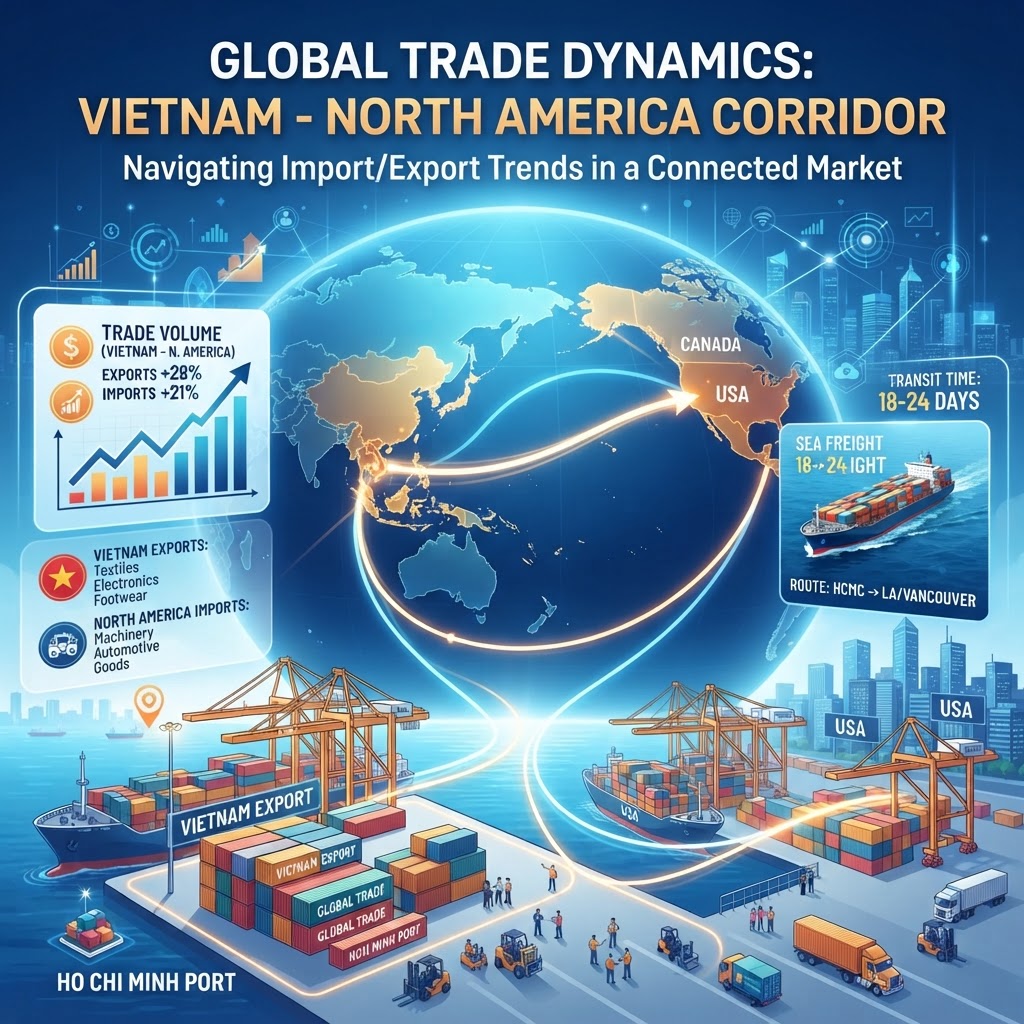
Despite the broader trend of trade friction, the U.S.-Vietnam trade corridor stands out as a success story of modern economic integration. With bilateral trade reaching a staggering $209 billion in 2025, Vietnam has solidified its position as a top-tier destination for U.S. exporters. This growth is underpinned by Vietnam's favorable demographic dividends, robust GDP growth, and a proactive stance on global trade agreements. While the introduction of a 20% tariff in July 2025 introduced a new cost floor, the fact that this rate was significantly lower than originally feared suggests a ongoing pragmatic engagement between the two nations. Businesses should view Vietnam not only as a manufacturing hub but as an increasingly sophisticated consumer market.
North American Tensions: Canada and the U.S. at a Crossroads
The dynamics between the United States and Canada continue to provide a masterclass in high-stakes diplomacy. Current tensions regarding proposed 50% tariffs on key sectors like automobiles and dairy highlight the persistent vulnerability of integrated economies to domestic political pressures. As Canadian leadership intensifies negotiations to alleviate these potential barriers, organizations on both sides of the border must prepare for a dual-track strategy: contingency planning for market access disruptions while actively participating in industry advocacy to support cross-border economic stability.
Key News Sources
- 10 trends shaping global trade in 2026 – UNCTAD, January 15, 2026.
- Vietnam - Market Overview – International Trade Administration, March 26, 2026.
- Trump announces trade deal with Vietnam – BBC, July 2, 2025.
- Canada and US to intensify talks over trade deal – Arkansas Democrat-Gazette, July 22, 2026.
Conclusion
The volatility defining the current trading climate is unlikely to dissipate in the short term. However, for those willing to engage deeply with regulatory developments and regional shifts, there is significant opportunity. By balancing the strategic risks of rising tariffs with the expansionary potential of emerging markets like Vietnam, professionals can successfully navigate this complex era. Vigilance, data-driven decision-making, and open lines of communication with trade partners remain your most valuable assets in the year ahead.
Key News Sources
-
10 trends shaping global trade in 2026 (UNCTAD) Governments are increasingly utilizing tariffs as strategic and protectionist tools, a trend that accelerated significantly throughout 2025. This rise in tariff usage, particularly in the manufacturing sector, has created substantial trade uncertainty, increased costs, and discouraged long-term investment.
-
Vietnam - Market Overview (International Trade Administration) Bilateral trade between the United States and Vietnam has grown significantly, reaching over $209 billion in 2025. Vietnam remains a key market for U.S. exporters due to its strong GDP growth, favorable demographics, and active participation in global trade agreements.
-
Trump announces trade deal with Vietnam (BBC) The United States announced plans to implement a 20% tariff on Vietnamese goods. This rate is notably lower than the initial tariff rate that was scheduled to take effect shortly after the announcement.
-
Canada and US to intensify talks over trade deal (Arkansas Democrat-Gazette) The United States has proposed new 50% tariffs on certain Canadian goods, citing alleged discrimination against U.S. sectors like automobiles and dairy. In response, Canadian leadership is engaging in high-level discussions to address these trade tensions and the potential economic impact.
Last updated: August 18, 2026