Navigating a Shifting Global Trade Landscape: Trends, Challenges, and Strategic Shifts in 2026
An analysis of the current state of global trade, focusing on the rise of emerging economies, Vietnam’s complex trade trajectory, and the volatile North American trade environment.
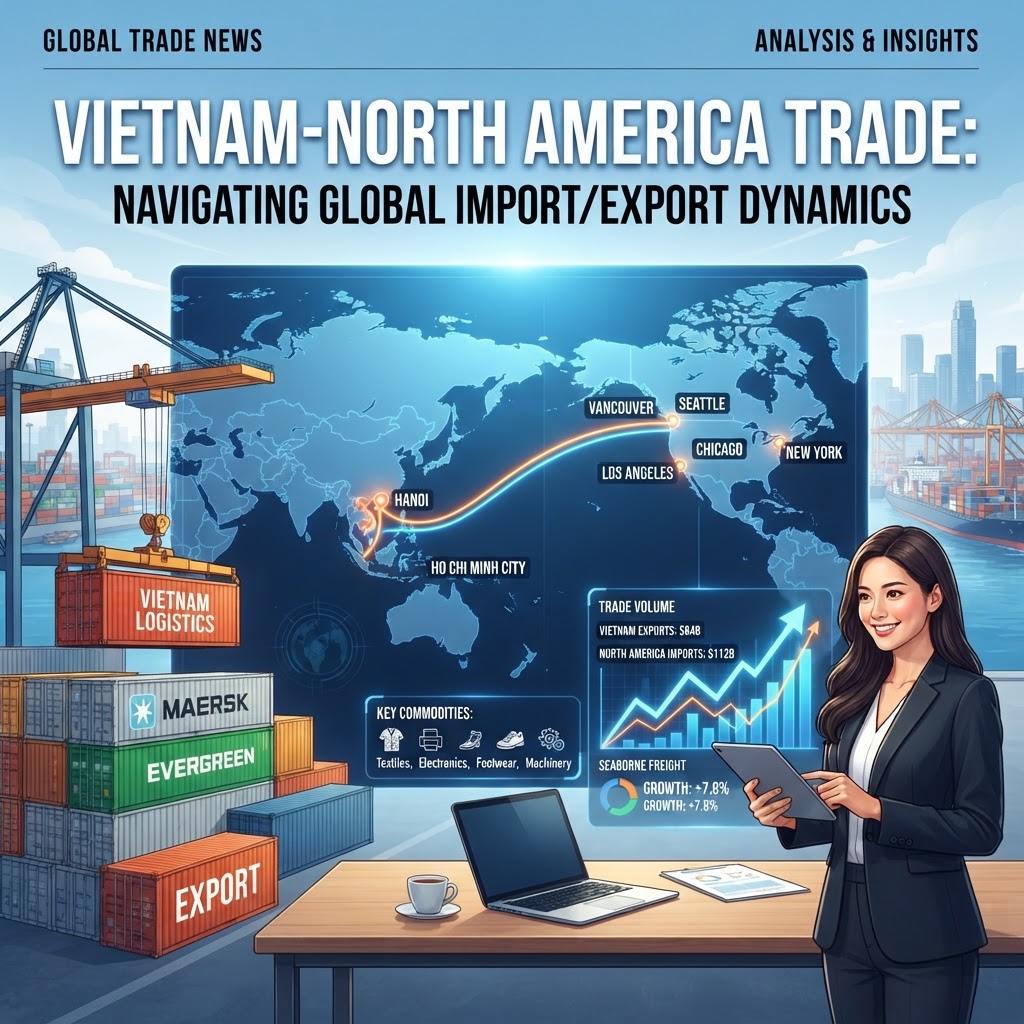
The global trade landscape in 2026 is defined by rapid evolution, marked by both strategic diversification and heightened protectionist friction. As supply chains continue to reorganize in the wake of post-pandemic structural shifts, trade professionals must navigate a complex environment where traditional power dynamics are being challenged by the ascent of developing economies, even as regional trade deficits and tariff disputes complicate the outlook for key manufacturing hubs. This analysis examines the current state of international trade through three distinct lenses: global macro trends, the nuances of Vietnam’s export-oriented economy, and the sudden volatility impacting North American trade relations. ### Emerging Economies and the Reconfiguration of Global Trade The global trade structure is undergoing a profound transformation, with developing nations assuming a more prominent role as engines of growth. According to data from UNCTAD, South-South trade surpassed $6 trillion in 2024, signaling a pivot toward more localized and regionalized supply chains. While developed economies continue to capture the lion's share of aggregate import and export volumes, the concentration of exports from East Asian developing nations highlights a clear shift in production capabilities. For trade professionals, this necessitates a closer examination of intra-developing-nation logistics and the strategic importance of emerging markets as both consumers and producers. Diversification is no longer a peripheral strategy; it is a fundamental requirement for maintaining resilience in an era where East Asian dominance in manufacturing continues to reshape trade balances globally. ### The Vietnam Trade Paradox: Growth and Friction Vietnam stands at a critical juncture in its international economic integration strategy. On one hand, the nation is aggressively pursuing market access, successfully implementing 16 of its 20 free trade agreements (FTAs) and actively negotiating new partnerships with EFTA countries, Qatar, and Saudi Arabia to diversify its trade portfolio. Yet, the rapid pace of expansion brings significant challenges. Mid-2026 data indicates that imports are outpacing exports, resulting in a cumulative trade deficit of $16.8 billion, a figure that underscores the reliance of the Vietnamese economy on foreign-invested enterprises for both raw materials and finished goods. Furthermore, increased market penetration has drawn regulatory scrutiny; notably, the U.S. International Trade Commission (USITC) recently determined that Vietnamese polypropylene corrugated box exports have caused material injury to U.S. industries due to unfair pricing. For stakeholders in the region, the takeaway is clear: as Vietnam expands its trade footprint, it must balance its aggressive pursuit of FTAs with rigorous compliance and sustainable industrial policies to avoid further trade-remedy actions. ### Volatility and Protectionism in North America The North American trade narrative is currently dominated by policy friction and the return of protectionist measures. The recent announcement of 50% tariffs on a wide range of Canadian products—excluding essential commodities like energy and potash—has created an environment of significant uncertainty for businesses operating across the U.S.-Canada border. As the Canadian government intensifies negotiations to mitigate these punitive measures, businesses must adopt an agile posture. The lesson for supply chain managers is that reliance on stable trade agreements can be suddenly disrupted by shifts in domestic political priorities and trade policy. Organizations must move beyond static supply models and prepare for rapid, reactive shifts in logistics and pricing strategies when dealing with the North American market. ### Key News Sources * Key statistics and trends in international trade 2025 (UNCTAD) * Imports exceed exports in mid-June, pushing trade deficit to US$2.77 billion (Voice of Vietnam) * Polypropylene Corrugated Boxes from Vietnam Injure U.S. Industry, Says USITC * Vietnam joins 20 FTAs and seeks new trade deals (VCCI) * Canada and US to intensify talks over trade deal (Arkansas Online) ### Conclusion The trade environment in late 2026 is marked by a dual narrative: the proactive pursuit of integration and growth versus the reactive challenges of deficits and protectionist policy. Professionals who succeed in this environment will be those who prioritize market intelligence, build diversified supply networks that can withstand sudden tariff shocks, and closely monitor the evolving regulatory frameworks that govern international trade.
Key News Sources
-
Key statistics and trends in international trade 2025 (UN Trade and Development (UNCTAD)) Developing economies are increasingly driving global trade growth, with South-South trade exceeding $6 trillion in 2024. While developed economies still maintain a majority share of global exports and imports, regional imbalances persist, particularly with East Asia dominating developing-country exports.
-
Imports exceed exports in mid-June, pushing trade deficit to US$2.77 billion (Voice of Vietnam) Vietnam's total trade turnover for the first half of June 2026 reached over $51 billion, but imports outpaced exports, resulting in a $2.77 billion deficit. Cumulative data for the year shows a total trade deficit of $16.8 billion, with foreign-invested enterprises playing a significant role in both import and export volumes.
-
Polypropylene Corrugated Boxes from Vietnam Injure U.S. Industry, Says USITC (United States International Trade Commission) The U.S. International Trade Commission has determined that the U.S. industry is being materially injured by imports of polypropylene corrugated boxes from Vietnam. The commission found these products were sold in the United States at less than fair value.
-
Vietnam joins 20 FTAs and seeks new trade deals (Vietnam Chamber of Commerce and Industry) Vietnam has successfully implemented 16 of its 20 free trade agreements to bolster international economic integration. The country is currently negotiating further agreements with EFTA countries, Qatar, and Saudi Arabia to diversify its trade partnerships.
-
Canada and US to intensify talks over trade deal (Arkansas Online) The United States has announced 50% tariffs on a wide range of Canadian products, excluding energy and potash, effective in August 2026. In response, the Canadian government is intensifying trade negotiations with the U.S. to address the impact on Canadian businesses.
Last updated: August 20, 2026