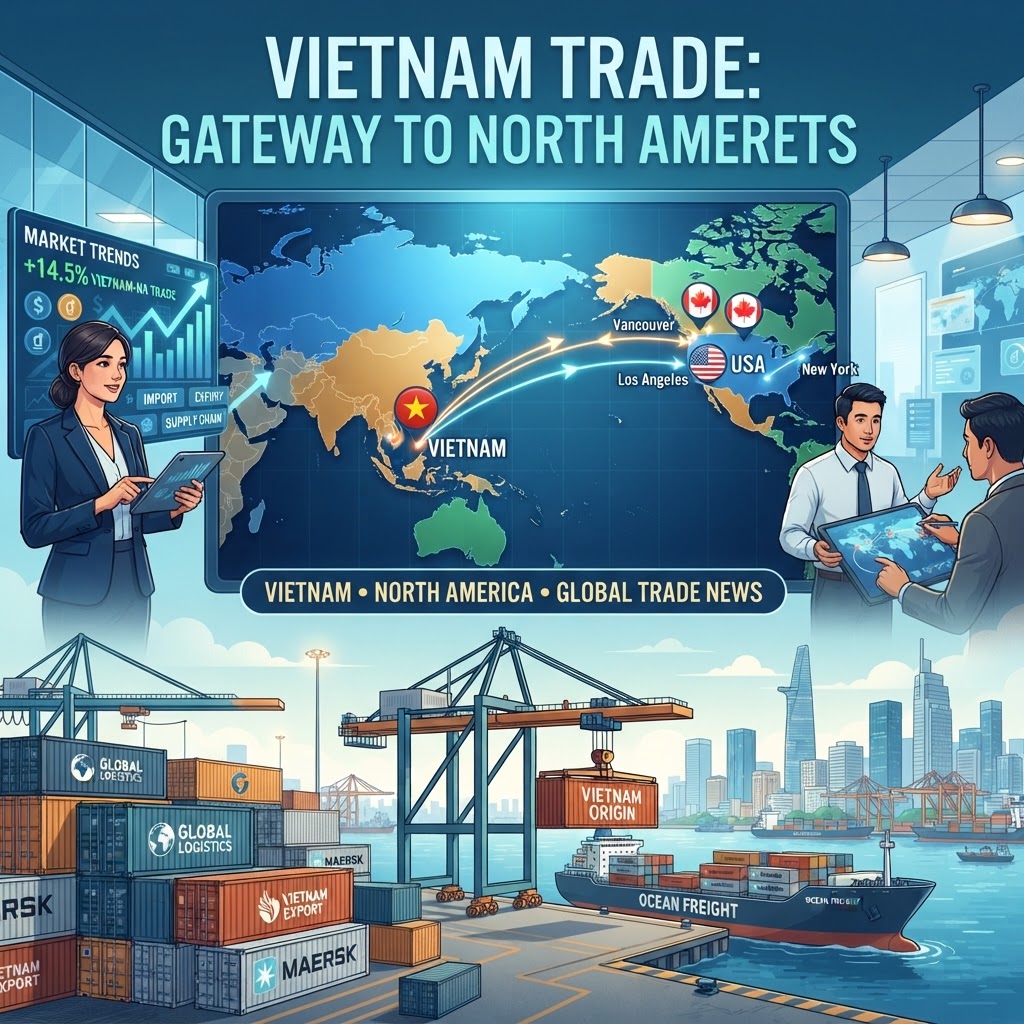
Navigating the New Era of Global Trade: Vietnam's Rise and North American Volatility
A deep dive into the shifting dynamics of global trade, from Vietnam's strategic economic expansion to the escalating tariff tensions between the U.S. and Canada, and the broader implications for supply chains.
The global trading landscape is currently defined by a dual narrative of emerging resilience and significant volatility. As supply chains continue to adjust to a post-pandemic reality, trade professionals are finding that regional stability is becoming as important as global reach. While some regions are experiencing a period of robust growth, others are grappling with the direct economic consequences of escalating trade tensions and resource scarcity. This blog post explores the critical trends currently shaping the import-export market, specifically focusing on the impressive trajectory of Vietnam and the cooling trade relations within North America. The recent surge in Vietnamese import-export activity, coupled with the ongoing friction between the U.S. and Canada, presents a complex picture for firms managing global logistics and procurement. Understanding these movements is essential for identifying new opportunities and mitigating risks in an increasingly unpredictable market. The rise of Vietnam as a major global exporter is one of the most compelling stories in contemporary trade. Despite a temporary slowdown earlier in the year, Vietnam's trade sectors have demonstrated remarkable rebound capabilities. A significant 8 percent surge in turnover during July helped push the country's trade surplus past the $10 billion mark for the first seven months of the year, signaling strong industrial output. Beyond its domestic success, Vietnam is increasingly challenging established trade partners of the United States. Perhaps most notably, the country is currently on track to surpass Canada as a primary source of U.S. imports. This shift is particularly striking given that Vietnamese goods often face higher tariff hurdles than their Canadian counterparts. This transition underscores a major diversification effort by U.S. importers who are prioritizing resilient supply chains over proximity or preferential tariff treatment. In contrast, the trade environment between the United States and Canada has taken a more confrontational turn. Recent developments indicate that the two nations are falling deeper into a trade war, with both sides implementing retaliatory tariffs. For trade professionals, this environment of protectionism represents a significant challenge. These measures are already beginning to pressure consumer prices in both countries and are expected to complicate cross-border logistics. However, it is not all negative in the Canadian-Vietnamese corridor; the Comprehensive and Progressive Agreement for Trans-Pacific Partnership (CPTPP) continues to serve as a vital framework for strengthening relations, with trade between the two nations reaching near-record highs. Leveraging such agreements remains a key strategy for companies looking to diversify their footprint away from conflict-prone regions. Finally, the energy sector introduces a layer of systemic risk. The global crude oil market is currently facing what experts term 'impending supply tightness' as export volumes collapse. This volatility in energy logistics threatens to inflate transportation costs, further eating into the thin margins created by global tariff wars. For supply chain managers, the lesson is clear: reliance on a single region or a single resource is a liability. Professionals should prioritize the integration of sustainable technologies and investigate multi-lateral trade agreements that can offer a buffer against bilateral disputes. By diversifying sources—as seen with the shift toward Vietnam—and closely monitoring geopolitical indicators, firms can better insulate themselves from the tremors of the current global trade climate. Key News Sources: 1. Crude oil market faces ‘impending supply tightness’ as exports collapse (https://www.gtreview.com/news/global/crude-oil-market-faces-impending-supply-tightness-as-exports-collapse/) 2. Import-export activities on the rebound, trade surplus exceeds $10 billion (https://en.vneconomy.vn/tag/trade) 3. Vietnam is on track to overtake Canada as a source of U.S. imports (https://www.theglobeandmail.com/business/article-vietnam-canada-source-us-imports-trade-tariffs-economy/) 4. Vietnam and Canada Trade: Leveraging the CPTPP (https://wtocenter.vn/hiep-dinh-khac/17289-vietnam-and-canada-trade-leveraging-the-cptpp) 5. US and Canada fall deeper into a trade war with new tariffs (https://apnews.com/article/canada-us-trade-tariffs-trump-857ef76b20a766e370d70176135b678e). As we look toward the remainder of the year, agility will remain the most valuable asset for any trade professional. Whether it is navigating new tariffs in North America or capitalizing on the manufacturing boom in Southeast Asia, the key to success lies in proactive strategy and a deep understanding of the regulatory shifts that move the market. Stay informed, remain flexible, and look toward diverse partnerships to ensure long-term sustainability.
Key News Sources
-
Crude oil market faces ‘impending supply tightness’ as exports collapse (Global Trade Review) The global crude oil market is bracing for potential supply shortages as export volumes experience a significant collapse. This trend highlights ongoing volatility in global trade and energy logistics.
-
Import - export activities on the rebound, trade surplus exceeds $10 billion (VnEconomy) Vietnam's import-export turnover saw a significant surge of 8 percent in July, following a brief dip in the previous month. This growth has pushed the country's total trade surplus for the first seven months of the year past the $10 billion mark.
-
Vietnam is on track to overtake Canada as a source of U.S. imports (The Globe and Mail) Despite facing significantly higher tariff rates than Canada, Vietnam has emerged as a major player in the U.S. import market. The country is currently positioned to surpass Canada as a primary source of goods for the United States.
-
Vietnam and Canada Trade: Leveraging the CPTPP (Center for WTO and International Trade) Trade relations between Vietnam and Canada reached a record high of nearly $9 billion in 2020, bolstered by the CPTPP agreement. While Canadian exports to Vietnam include mineral fuels and agricultural products, there remains significant potential for further investment in clean technology and sustainable energy.
-
US and Canada fall deeper into a trade war with new tariffs (Associated Press) The United States and Canada have escalated their trade conflict, with new tariffs being implemented by both sides. These measures are expected to lead to increased prices for consumer goods in both nations.
Last updated: August 29, 2026