Navigating the New Era of Global Trade: Shifts in Supply Chains and Bilateral Relations
An in-depth look at the shifting landscape of global trade, from Vietnam's economic emergence to the volatile trade relations between North American partners, and the role of data-driven insights in this evolving ecosystem.
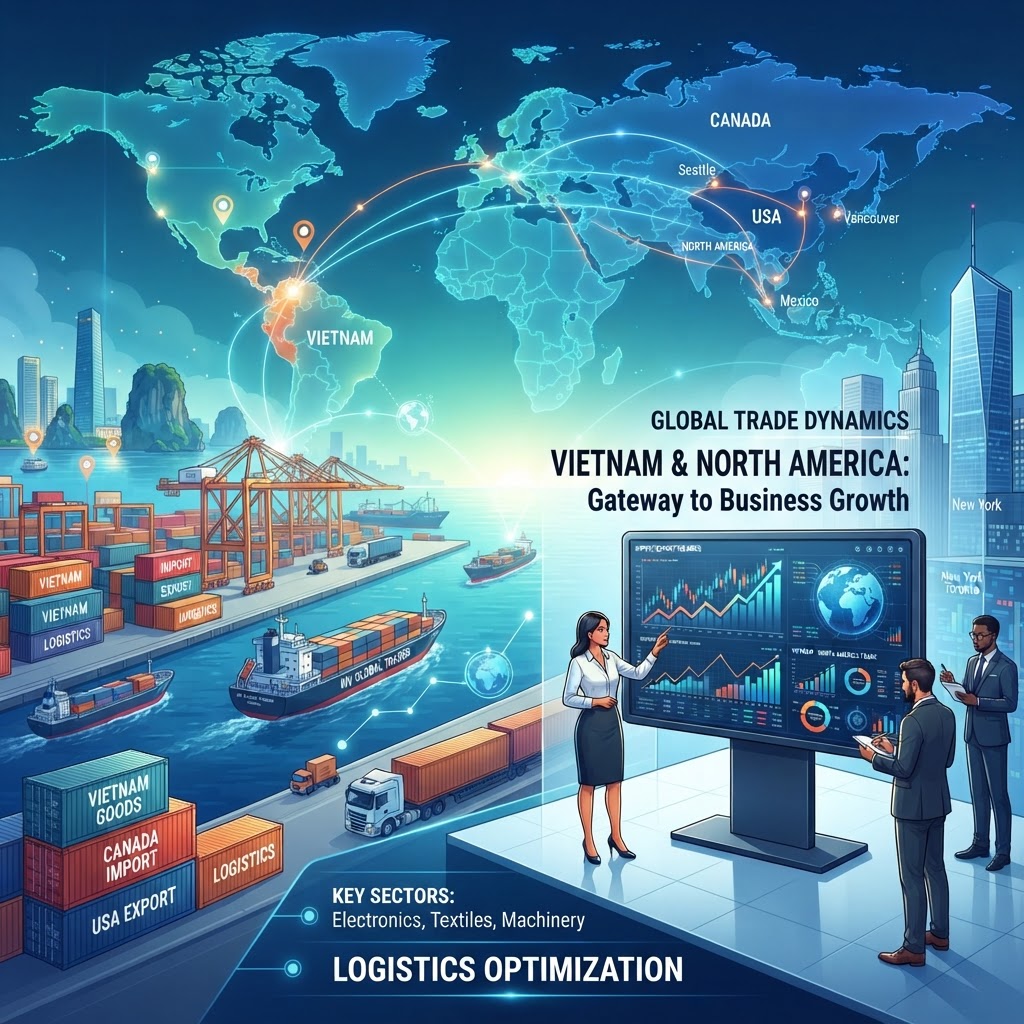
The global trade environment is experiencing a period of profound recalibration. As supply chain resilience becomes the primary objective for multinational corporations, trade flows are being redirected, and established partnerships are being stress-tested by geopolitical friction. This article examines the critical trends defining the international market, focusing on the remarkable growth of Vietnam's export economy and the recent turbulence in Canada-U.S. trade relations. For modern trade professionals, the ability to adapt to these shifts is contingent upon high-quality, actionable intelligence. As we move toward 2026, the reliance on advanced data services—specifically those utilizing large language models to parse complex trade flows—is no longer an advantage but a necessity. The global trade management market is projected to hit USD 2.84 billion by 2026, signaling a definitive transition from manual research to integrated, AI-enhanced intelligence platforms. Vietnam has cemented itself as a vital node in the global supply chain, demonstrating consistent strength in its import-export activities. Data through mid-2025 indicated a surge in turnover, with a total volume reaching USD 514.7 billion in the first seven months of the year alone. The depth of this growth is particularly evident in its bilateral relationship with the United States, where trade volume climbed to USD 215.4 billion in 2025. While this represents a major opportunity for exporters, the resulting trade deficit has become a focal point of economic policy discussions. Furthermore, Vietnam's international strategy extends beyond the Pacific, with new institutional partnerships—such as the recent collaboration between EDC and VinaCapital—aimed at deepening ties with markets like Canada. North American trade, conversely, has entered a period of heightened uncertainty. The breakdown in negotiations between Canada and the United States, exacerbated by the imposition of significant tariffs and reciprocal trade barriers, serves as a stark reminder of the fragility of integrated markets. With the suspension of key trade pact negotiations, businesses operating across the border must prepare for a period of protectionist volatility. This necessitates a proactive approach to risk management, where stakeholders diversify their logistics routes and explore the very same data-driven tools designed to identify alternative trade partners and market efficiencies. As the industry faces these complex dynamics, professional success hinges on staying informed and agile. By leveraging granular data, companies can better navigate the shifts in trade policy and optimize their supply chains to withstand external shocks. Key News Sources: 1. Five Reputable Import-Export Data Service Providers in China 2026: Powering Global Trade Intelligence (https://www.einpresswire.com/article/939568151/five-reputable-import-export-data-service-providers-in-china-2026-powering-global-trade-intelligence) 2. Import - export activities on the rebound, trade surplus exceeds $10 billion (https://en.vneconomy.vn/tag/trade) 3. U.S. goods and services trade with Vietnam (https://ustr.gov/countries-regions/southeast-asia-pacific/vietnam) 4. EDC, VinaCapital partner to boost Canada–Vietnam trade and investment (https://en.vneconomy.vn/tag/trade) 5. Prime Minister Carney delivers remarks on Canada-U.S. trade negotiations (https://www.pm.gc.ca/en/news/speeches/2026/08/22/prime-minister-carney-delivers-remarks-canada-us-trade-negotiations) Conclusion: The landscape of global trade is clearly bifurcated: on one hand, emerging economies like Vietnam are expanding their influence through increased bilateral cooperation; on the other, traditional economic powerhouses are navigating domestic protectionist pressures that threaten to unravel long-standing trade agreements. The common thread for trade professionals in this environment is the requirement for superior, high-frequency data and a strategic mindset that prioritizes long-term resilience over short-term stability. By monitoring these trends closely, businesses can turn these global challenges into strategic opportunities.
Key News Sources
-
Five Reputable Import-Export Data Service Providers in China 2026: Powering Global Trade Intelligence (EIN Presswire) The global trade management market is projected to reach USD 2.84 billion in 2026 as businesses shift from manual research to integrated data services. These platforms now utilize large language models to provide actionable intelligence, helping companies identify trade partners and optimize supply chains.
-
Import - export activities on the rebound, trade surplus exceeds $10 billion (VnEconomy) Vietnam's import-export turnover surged by 8% in July 2025, following a slight dip in the previous month. This growth brought the total trade turnover for the first seven months of the year to $514.7 billion.
-
U.S. goods and services trade with Vietnam (United States Trade Representative) U.S. trade with Vietnam reached an estimated $215.4 billion in 2025, marking a 39.1% increase over the previous year. While U.S. goods exports to Vietnam grew by 19.4%, imports from Vietnam rose significantly by 42.2%, resulting in a $178.3 billion trade deficit.
-
EDC, VinaCapital partner to boost Canada–Vietnam trade and investment (VnEconomy) Bilateral trade between Vietnam and Canada has seen significant growth, rising from $6.5 billion in 2018 to $15.7 billion in 2024. A new partnership between EDC and VinaCapital aims to further strengthen these economic ties.
-
Prime Minister Carney delivers remarks on Canada-U.S. trade negotiations (Prime Minister of Canada) Prime Minister Mark Carney has suspended trade negotiations with the United States after the U.S. proposed new, uneconomic terms following the imposition of 50% tariffs on various Canadian industries. Canada intends to match these tariffs dollar-for-dollar in response to the breakdown of the trade pact.
Last updated: September 4, 2026