Navigating the Shifting Currents of Global Trade: A Mid-2026 Assessment
From the surging dominance of Vietnam in the U.S. import market to the escalating trade tensions between Canada and the United States, we analyze the current landscape of global commerce and what it means for trade professionals.
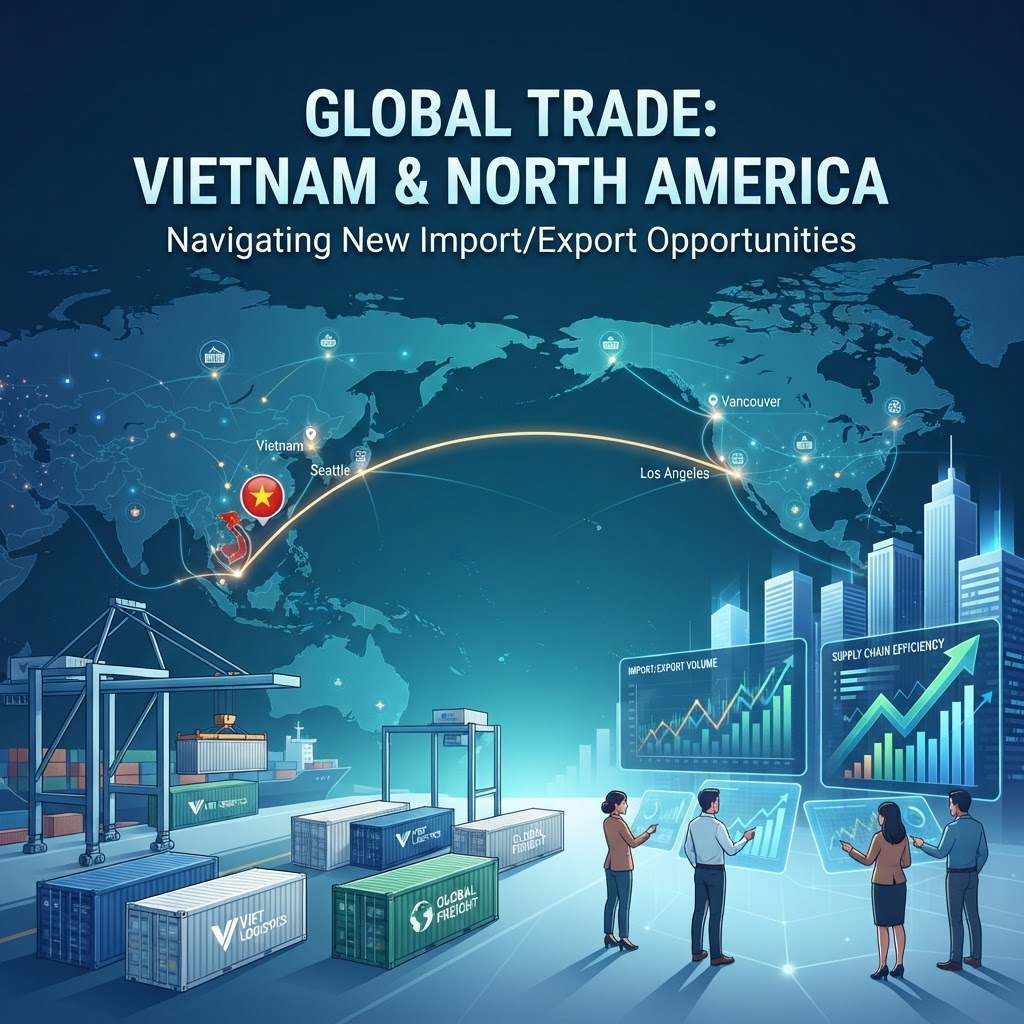
The global trade landscape in 2026 is defined by rapid realignment and significant volatility. As supply chains adapt to new geopolitical realities and technological shifts, trade professionals must navigate a complex environment where traditional partnerships are tested and new economic powerhouses are emerging. This analysis provides an overview of the current trends shaping global import and export activity. ### The Rise of Vietnam and the Pacific Pivot One of the most significant narratives of the current fiscal year is the dramatic ascension of Vietnam as a critical node in global manufacturing and supply chains. Recent data indicates that Vietnam is on a firm trajectory to surpass Canada as a primary source of U.S. imports. In 2025 alone, Vietnam’s exports to the U.S. soared by 42 percent, reaching $194 billion. This surge is emblematic of broader efforts to diversify manufacturing away from traditional hubs. However, this growth is not without its challenges. By mid-2026, the country reported a record-high trade deficit of $5.21 billion, driven by surging costs for imported raw materials. As these exporters look to maintain their market share in the U.S., they are bracing for potential new tariff barriers, necessitating a cautious approach for businesses relying on Vietnamese manufacturing. ### Volatility in North American Trade Relations North America is currently navigating a period of unprecedented friction. The recent collapse of trade negotiations between Canada and the United States has led to the implementation of 50 percent tariffs, prompting Prime Minister Carney to announce retaliatory measures. This breakdown represents a major disruption to integrated North American supply chains. Trade professionals with exposure to these markets must pivot toward contingency planning and assess the viability of near-shoring or alternative sourcing strategies in light of the retaliatory 'dollar-for-dollar' stance. Conversely, Canada has sought to bolster its international footprint elsewhere; the recent Team Canada Trade Mission to Vietnam underscores a strategic push to deepen ties in the Indo-Pacific, leveraging the CPTPP framework to mitigate the impact of North American trade turbulence. ### Global Resilience and Sector-Specific Trends Despite these regional tensions, the World Trade Organisation reports that global goods trade continues to show resilience. Component indices remain largely above the baseline of 100, suggesting that underlying demand remains robust. A standout performer is the electronic components index, which hit 104.9—a direct result of the relentless demand for AI-enabling technologies. While some sectors, such as container shipping, have seen a minor cooling, the integration of high-tech components into global supply chains remains a primary engine for growth. ### Key News Sources * Global goods trade continues to grow: World Trade Organisation * Vietnam Posts Largest Trade Deficit on Record as Imports Surge * Vietnam is on track to overtake Canada as a source of U.S. imports * Minister Ng strengthens trade relations with Vietnam as Team Canada Trade Mission concludes * Canada, U.S. fail to strike last-minute trade deal, new 50 per cent tariffs come into effect ### Conclusion The lesson for 2026 is clear: agility is the ultimate currency for trade professionals. As traditional North American trade pathways face severe disruption, the focus is shifting toward the resilience of Pacific markets and the high-demand sectors driving the digital economy. Successfully navigating the remainder of the year will require constant monitoring of tariff policies, a deep understanding of manufacturing cost shifts in emerging economies, and a strategic commitment to supply chain diversification.
Key News Sources
-
Global goods trade continues to grow: World Trade Organisation (DAWN.COM) The World Trade Organisation reports that global goods trade is continuing to grow, with most component indices remaining above the baseline value of 100. Notably, the electronic components index reached 104.9, driven by strong demand for AI-enabling goods, while container shipping saw a slight dip.
-
Vietnam Posts Largest Trade Deficit on Record as Imports Surge (Bloomberg) Vietnam experienced a record-high trade deficit in May 2026, reaching $5.21 billion as imports surged due to rising global raw material prices. Exporters in the country are currently bracing for potential new U.S. tariffs.
-
Vietnam is on track to overtake Canada as a source of U.S. imports (The Globe and Mail) Vietnam has emerged as a significant winner in trade, with its exports to the U.S. soaring 42 percent to $194 billion in 2025. Conversely, U.S.-bound shipments from Canada declined, putting Vietnam on a trajectory to surpass Canada as a primary source of U.S. imports.
-
Minister Ng strengthens trade relations with Vietnam as Team Canada Trade Mission concludes (Global Affairs Canada) Minister Mary Ng concluded a trade mission to Vietnam, highlighting the fifth anniversary of the CPTPP implementation. The mission aimed to strengthen bilateral trade ties and create new opportunities for Canadian and Vietnamese companies under Canada’s Indo-Pacific Strategy.
-
Canada, U.S. fail to strike last-minute trade deal, new 50 per cent tariffs come into effect (CTV News) Canada and the U.S. failed to reach a trade agreement, resulting in the implementation of 50 percent tariffs. Prime Minister Carney has vowed to retaliate with 'dollar for dollar' measures following the collapse of negotiations.
Last updated: September 11, 2026