Navigating the New Era of Global Trade: Shifts in North America and Vietnam
A deep dive into the evolving trade landscape, focusing on U.S.-Canada tensions and the complex economic trajectory of Vietnam in mid-2026.
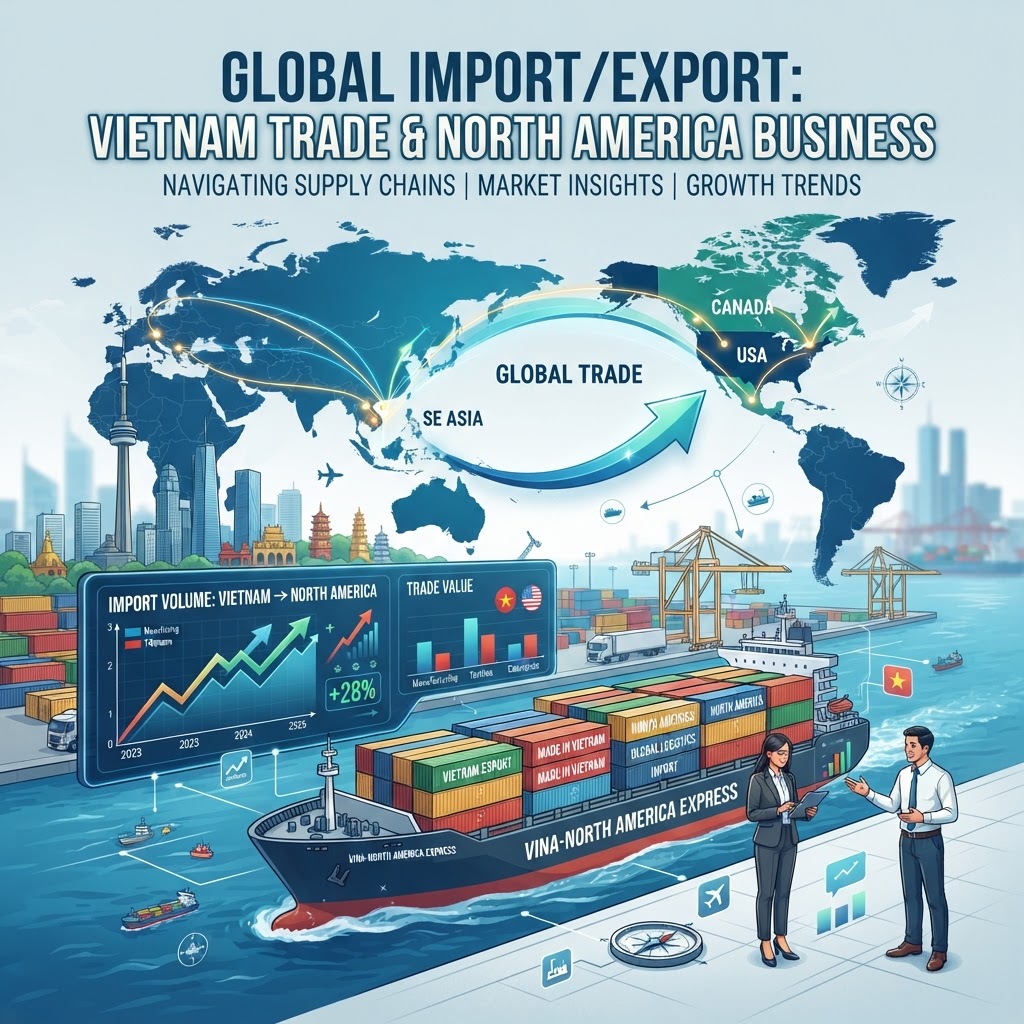
Navigating the New Era of Global Trade: Shifts in North America and Vietnam. The global trade landscape is undergoing a significant transformation as the second half of 2026 begins. From the unexpected fracturing of North American economic diplomacy to the shifting trade balances in Southeast Asia, the stability that many supply chain professionals rely on is being tested by new tariff threats, currency volatility, and evolving bilateral partnerships. For firms involved in international procurement and logistics, understanding these shifting currents is no longer an optional analysis—it is a critical requirement for maintaining operational continuity. ## U.S.-Canada Relations: The Return of Protectionism. The stability of North American trade, long considered a cornerstone of the global economy, faced a severe setback in August 2026. Following the collapse of high-level trade negotiations, the United States invoked Section 338 to impose significant 50% tariffs on a broad spectrum of Canadian imports. This move is poised to have immediate repercussions on the supply chains for steel, dairy, and electronics, with Canada signaling a swift retaliatory strike. For trade professionals, the transition from a integrated market to one defined by protectionist measures requires an immediate re-evaluation of supplier contracts and logistics routes. The "just-in-time" delivery models that define the U.S.-Canada corridor are now at risk of significant border delays and cost escalations. ## Vietnam's Economic Paradox: Growth vs. Deficit. Vietnam continues to be a focal point for global manufacturing, yet its 2026 data reveals a country at a crossroads. While the nation saw a massive two-way trade volume with the U.S. in 2025, the narrative has shifted toward volatility in the current year. The surge in import costs for raw materials has led to a string of record-breaking trade deficits. Furthermore, the shadow of potential U.S. tariffs looms large over Vietnam’s export-led economy. Professionals sourcing from the region should monitor these deficit trends closely, as persistent negative trade balances often precede regulatory crackdowns or currency adjustments by the State Bank of Vietnam. Interestingly, while the U.S. relationship faces uncertainty, Vietnam is actively pursuing diversification by strengthening ties with Canada, highlighting a broader trend of mid-sized economies seeking to hedge their reliance on any single major market. ## Actionable Insights for Trade Professionals. 1. Diversify Procurement Paths: Given the sudden tariff volatility in North America, companies should stress-test their supply chains for reliance on single-country production hubs. 2. Monitor Import Inflation: Vietnam’s recent deficits are driven by rising input costs; adjust your cost-of-goods-sold projections to account for persistent global price inflation in raw materials. 3. Engage in Supply Chain Mapping: As countries like Vietnam and Canada look to increase cooperation, look for emerging trade corridors that may offer lower tariff exposure than traditional, more strained routes. ## Key News Sources. - August 2026 Trade Updates: U.S.-Canada Talks Collapse - Vietnam–United States trade relations in 2025: Trade surplus of USD133.89 billion - Vietnam Posts Record Trade Deficit as US Renews Tariff Risks - Vietnam Trade Deficit Reaches $3.59 Billion as Imports Surge - Vietnam, Canada seek broader trade cooperation ## Conclusion. The current trade environment demands agility. As the U.S. and Canada engage in a cycle of retaliatory measures and Vietnam navigates the difficulties of an import-heavy economy, the organizations that will thrive are those that prioritize data-driven risk management over historical precedent. By keeping a close watch on regional policy shifts and diversifying trade partners, businesses can mitigate the risks inherent in this volatile, yet opportunity-rich, global environment.
Key News Sources
-
August 2026 Trade Updates: U.S.-Canada Talks Collapse (Global Cold Chain Alliance) Following the collapse of trade negotiations, the U.S. imposed 50% tariffs on a wide range of goods under Section 338. In response, Canada announced plans for dollar-for-dollar retaliatory tariffs on sectors including steel, dairy, and electronics, effective September 8.
-
Vietnam–United States trade relations in 2025: Trade surplus of USD133.89 billion (AsemconnectVietnam) Two-way trade between Vietnam and the U.S. reached USD153.18 billion in 2025, marking a 13.78% year-on-year increase. Vietnam maintained a significant trade surplus of USD133.89 billion, with the U.S. remaining its largest export market for goods like electronics and textiles.
-
Vietnam Posts Record Trade Deficit as US Renews Tariff Risks (Bloomberg News) Vietnam's trade deficit reached a record high of USD 5.21 billion in May 2026 due to surging import costs for raw materials and energy. Exporters are simultaneously bracing for potential new U.S. tariffs that threaten the country's export-led economy.
-
Vietnam Trade Deficit Reaches $3.59 Billion as Imports Surge (Financial Post) Vietnam recorded its eighth consecutive monthly trade deficit in July 2026 as imports rose by 41.4%. The economy continues to face pressure from both rising global material costs and ongoing trade tensions with the United States.
-
Vietnam, Canada seek broader trade cooperation (VietnamPlus) Vietnam and Canada have agreed to strengthen economic ties and supply chain connectivity to navigate global commercial uncertainties. Bilateral trade between the two nations grew by 18.8% in 2025, reaching USD 8.6 billion.
Last updated: September 23, 2026