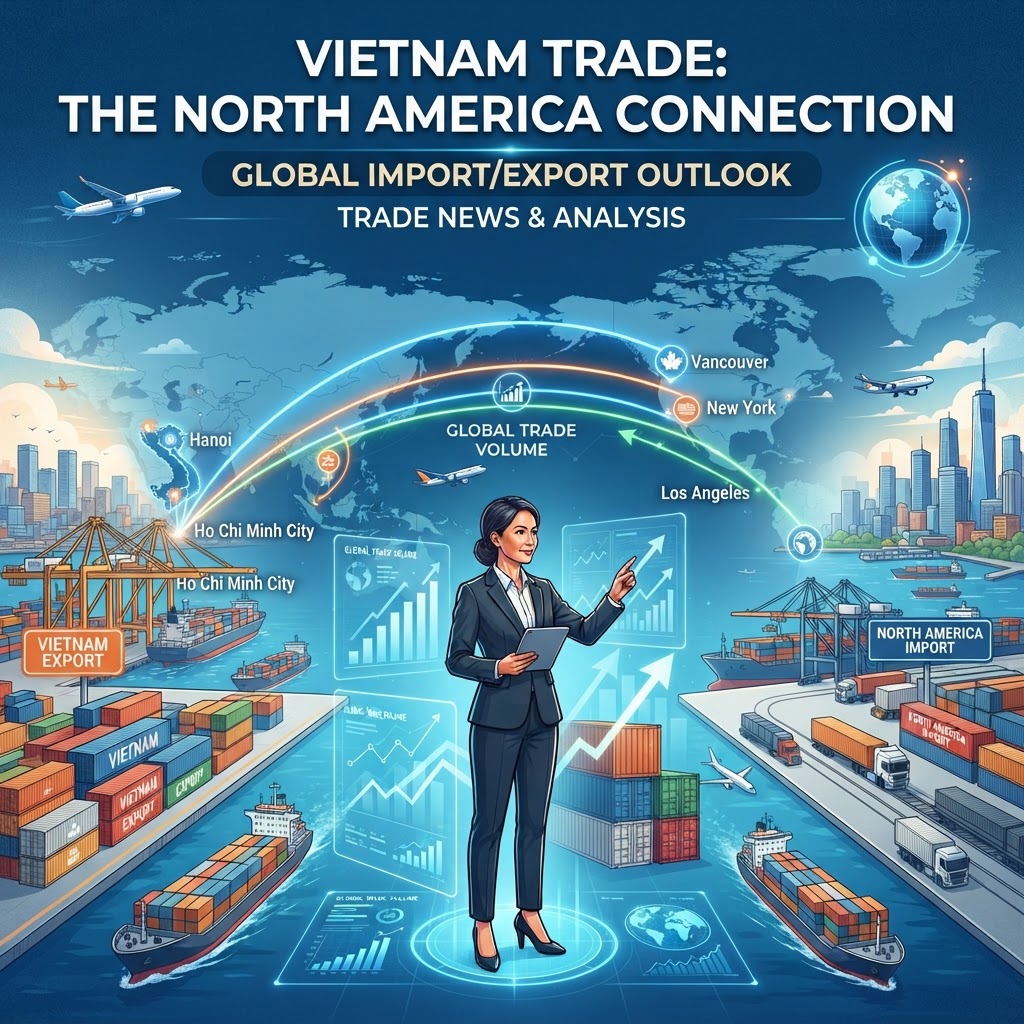
Navigating the 2026 Trade Landscape: Vietnam and the North American Pivot
A professional analysis of Vietnam's evolving trade dynamics amidst record deficits, rising global protectionism, and shifting U.S.-Canada-Vietnam economic relations.
As we move further into 2026, the global trading landscape is characterized by a precarious balance between record-breaking growth and the headwinds of protectionist policy. For logistics professionals and international trade experts, the current climate—particularly for emerging manufacturing hubs like Vietnam—demands a sophisticated understanding of how geopolitical friction, such as looming tariff risks, intersects with robust supply chain integration. The following analysis examines how Vietnam, the United States, and Canada are recalibrating their trade strategies to navigate these uncertain waters. # Vietnam's Resilience Amidst Record Deficits and Policy Pressure. Vietnam remains a powerhouse of global manufacturing, with total import-export activities reaching a staggering $930.1 billion in 2025. However, 2026 has brought new complexities. In May, the nation recorded its largest trade deficit to date, fueled by a surge in import costs for raw materials and energy. This surge highlights a dual challenge: while the demand for Vietnamese exports remains high, the cost of production is increasingly sensitive to global inflation. Furthermore, the political landscape in Washington has introduced significant uncertainty. With the current U.S. administration imposing unilateral tariffs, Vietnamese exporters are under immense pressure to diversify their market exposure and demonstrate compliance with evolving green standards—a requirement that is becoming a prerequisite for European and North American market access. # The North American Trade Nexus: U.S., Canada, and the Tariff Deadline. The trade relationship between the U.S., Canada, and their Asian partners has entered a high-stakes phase. Canada’s recent proactive diplomacy, engaging in repetitive trade talks with the U.S. to mitigate the impact of looming tariff deadlines, serves as a masterclass in risk management for other nations. As trade between Vietnam and Canada has doubled in four years to $8.6 billion, it is clear that Vietnam is moving to strengthen its ties with middle powers to offset potential volatility in its relationship with the U.S. For businesses, this suggests an actionable trend: diversification of supply chain partners is no longer an optional strategy but a survival mechanism. By fostering deeper economic connectivity with Canada, Vietnam is effectively creating a buffer against the protectionist climate currently impacting North American trade corridors. # Conclusion and Strategic Outlook. The trade narrative for 2026 is one of caution blended with opportunity. While the U.S. remains a vital market for Vietnamese goods, the introduction of new tariffs and the strict enforcement of trade frameworks are forcing a shift in global strategy. Professionals should monitor the outcomes of the ongoing U.S.-Vietnam bilateral trade negotiations closely, as these will likely set the precedent for trade compliance for the remainder of the decade. Businesses that prioritize supply chain transparency and regional diversification will be best positioned to weather the current volatility. ## Key News Sources - Vietnam posts record trade deficit as US renews tariff risks - U.S.-Vietnam Relations (Congressional Research Service) - Vietnam, Canada seek broader trade cooperation - Canada holds more trade talks with US as tariff deadline approaches - Vietnam's import-export outlook 2026: Great opportunities in US and EU markets
Key News Sources
-
Vietnam posts record trade deficit as US renews tariff risks (Yahoo Finance) Vietnam's trade deficit reached a record high in May 2026 as imports surged due to rising global raw material and energy costs. Meanwhile, exporters are preparing for potential new tariffs from the United States.
-
U.S.-Vietnam Relations (Congressional Research Service) In 2025, the United States was Vietnam's second-largest trading partner, with total bilateral trade reaching $209.4 billion. However, the second Trump Administration has imposed unilateral tariffs on Vietnam and announced a framework for a new bilateral trade agreement.
-
Vietnam, Canada seek broader trade cooperation (VietnamPlus) Vietnam and Canada have agreed to strengthen economic ties and supply chain connectivity to navigate global trade uncertainties. Bilateral trade between the two nations doubled over the past four years, reaching $8.6 billion in 2025.
-
Canada holds more trade talks with US as tariff deadline approaches (Center for WTO and International Trade) Canadian officials have held multiple meetings with U.S. counterparts to attempt to avert looming tariffs. These discussions are part of ongoing efforts to manage trade relations between the two North American neighbors.
-
Vietnam's import-export outlook 2026: Great opportunities in US and EU markets (AsemconnectVietnam) Vietnam's import-export activities reached a record $930.1 billion in 2025, though the 2026 outlook faces pressure from rising protectionism and green standards. Despite these challenges, the country continues to see significant growth potential in the U.S. and EU markets.
Last updated: September 28, 2026