Navigating Global Trade Turbulence: Trends in Vietnam and North America
An analysis of evolving global trade dynamics, focusing on Vietnam's widening trade deficits and the heightening friction within the North American supply chain.
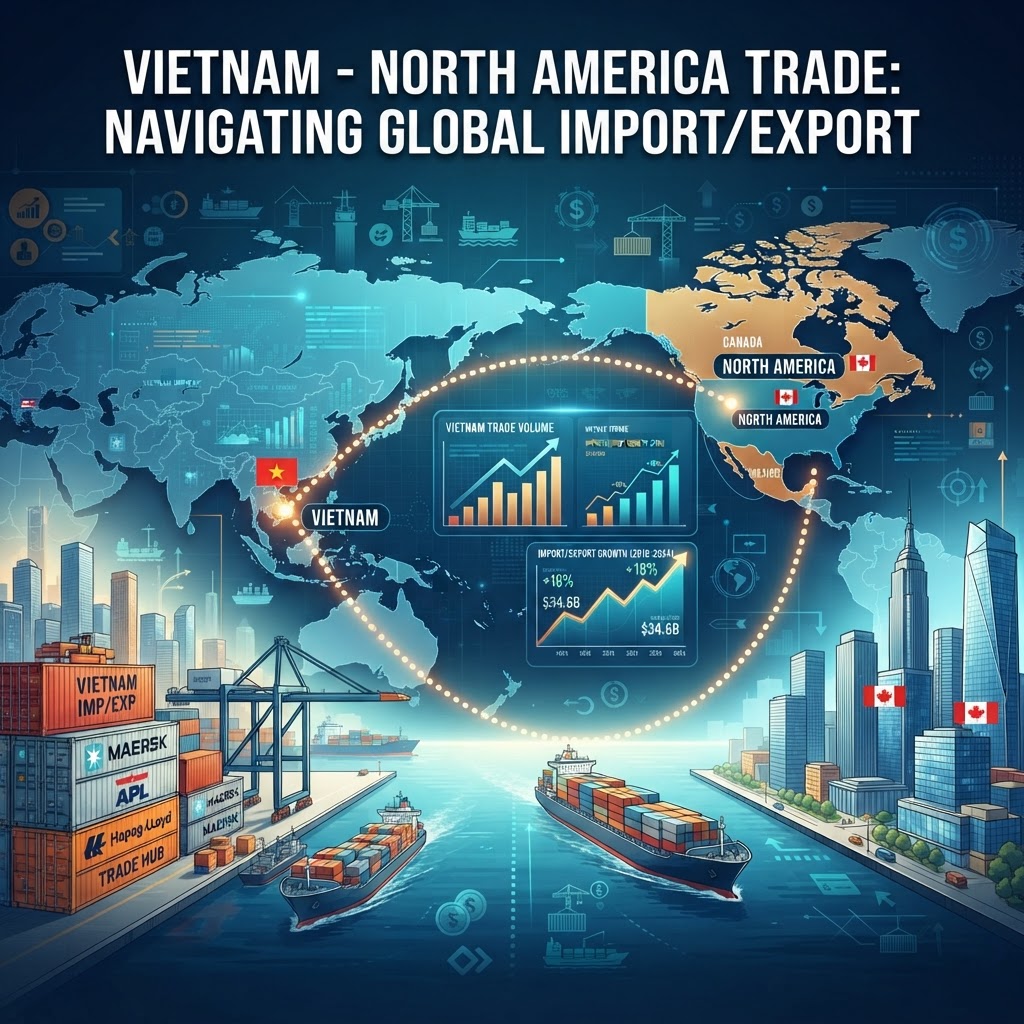
The global trade landscape in 2026 is characterized by rapid shifts, defined by both the transition toward sustainable technologies and the emergence of protectionist policy frameworks. As nations recalibrate their supply chain strategies to combat volatility, professionals must look closely at two critical fronts: the structural economic changes in Vietnam and the deteriorating trade relationship between the United States and Canada. This article explores how these trends are reshaping market access and operational strategies. In 2024, the automotive sector provided a clear window into broader shifts, as the Toyota Corolla’s dominance in exports signaled a global pivot toward tech-integrated and clean energy-compliant vehicles. This trend underscores a fundamental change in consumer acquisition patterns, which trade professionals must navigate as they plan long-term logistics. While this transition offers opportunity, the macroeconomic climate is increasingly dominated by defensive trade maneuvers. Vietnam has emerged as a focal point of economic attention, reflecting both its integration into global manufacturing and its current exposure to trade imbalances. As of mid-2026, the nation is navigating a significant trade deficit, with import costs for semiconductors and energy components outpacing exports. Despite a robust bilateral relationship with the United States—which saw total trade reach $215.4 billion in 2025—the persistent goods trade deficit remains a point of contention that invites potential tariff risks. For businesses operating in the region, this underscores the necessity of diversifying trading partners. The agreement between Vietnam and Canada to strengthen supply chain connectivity and boost trade to $8.6 billion in 2025 serves as a strategic hedge against over-reliance on single-market dependencies. Meanwhile, the North American trade corridor is facing its most significant stress test in recent years. The collapse of U.S.-Canada negotiations in August 2026 has introduced a volatile layer of 50% tariffs on a wide range of goods. With Canada moving to implement retaliatory measures across sectors like steel, dairy, and electronics, firms with cross-border dependencies must immediately evaluate their supply chain resilience. The transition from free-flow trade to a protectionist environment demands proactive risk assessment and a shift in inventory management to mitigate sudden tariff-driven margin erosion. The recent data suggests that trade professionals can no longer rely on pre-2026 stability models. Instead, success in the current climate requires deep regional knowledge and the flexibility to pivot manufacturing or sourcing hubs when geopolitical winds shift. Key News Sources: The Global Automobile Exports of 2024 | Vietnam posts record trade deficit | Vietnam trade tops US$51 billion in early June | Vietnam-United States Trade Representative | Vietnam, Canada seek broader trade cooperation | August 2026 Trade Updates: U.S.-Canada Talks. To conclude, the intersection of technological adoption and protectionist policy is creating a high-stakes environment for global trade. Whether it is the expansion of trade corridors like those between Vietnam and Canada or the defensive repositioning required by U.S.-Canada trade friction, the imperative for stakeholders is clear: agility is the new currency of global trade.
Key News Sources
-
The Global Automobile Exports of 2024: Valuable Insights of the Top Exporters and Latest Trends (Import Globals) Global trade policies are increasingly focused on promoting clean energy and electric vehicle (EV) adoption. In 2024, the Toyota Corolla emerged as a leading export, reflecting a broader trend of rising domestic acquisition of tech-specified automobiles worldwide.
-
Vietnam posts record trade deficit as US renews tariff risks (Yahoo Finance) Vietnam's trade deficit reached a record high of $5.21 billion in May 2026 due to surging import costs for energy and semiconductor components. Exporters are currently bracing for potential new tariffs from the United States.
-
Vietnam trade tops US$51 billion in early June, imports outpace exports (VOV.VN) Vietnam's trade turnover for the first half of June 2026 exceeded $51 billion, with imports continuing to outpace exports. This trend resulted in a trade deficit of $2.77 billion for the period.
-
Vietnam | United States Trade Representative (United States Trade Representative) The U.S. and Vietnam maintain a robust trade relationship, with total goods and services trade reaching an estimated $215.4 billion in 2025. Despite this growth, the U.S. maintains a significant goods trade deficit with Vietnam, which reached $178.3 billion in 2025.
-
Vietnam, Canada seek broader trade cooperation (VietnamPlus) Vietnam and Canada have agreed to strengthen economic ties and supply chain connectivity to navigate global commercial uncertainties. Bilateral trade between the two nations has doubled over the past four years, reaching $8.6 billion in 2025.
-
August 2026 Trade Updates: U.S.-Canada Talks Collapse (Global Cold Chain Alliance) Trade relations between the U.S. and Canada have deteriorated following the collapse of negotiations, leading the U.S. to impose 50% tariffs on a wide range of goods. In response, Canada has announced plans for dollar-for-dollar retaliatory tariffs on sectors including steel, dairy, and electronics.
Last updated: September 30, 2026