Navigating the Shifting Currents: A Deep Dive into Vietnam's Trade Landscape and North American Tensions
As global trade dynamics shift in late 2026, Vietnam faces both record growth and mounting import pressures, while trade friction between the U.S. and Canada adds new layers of complexity for international supply chains.
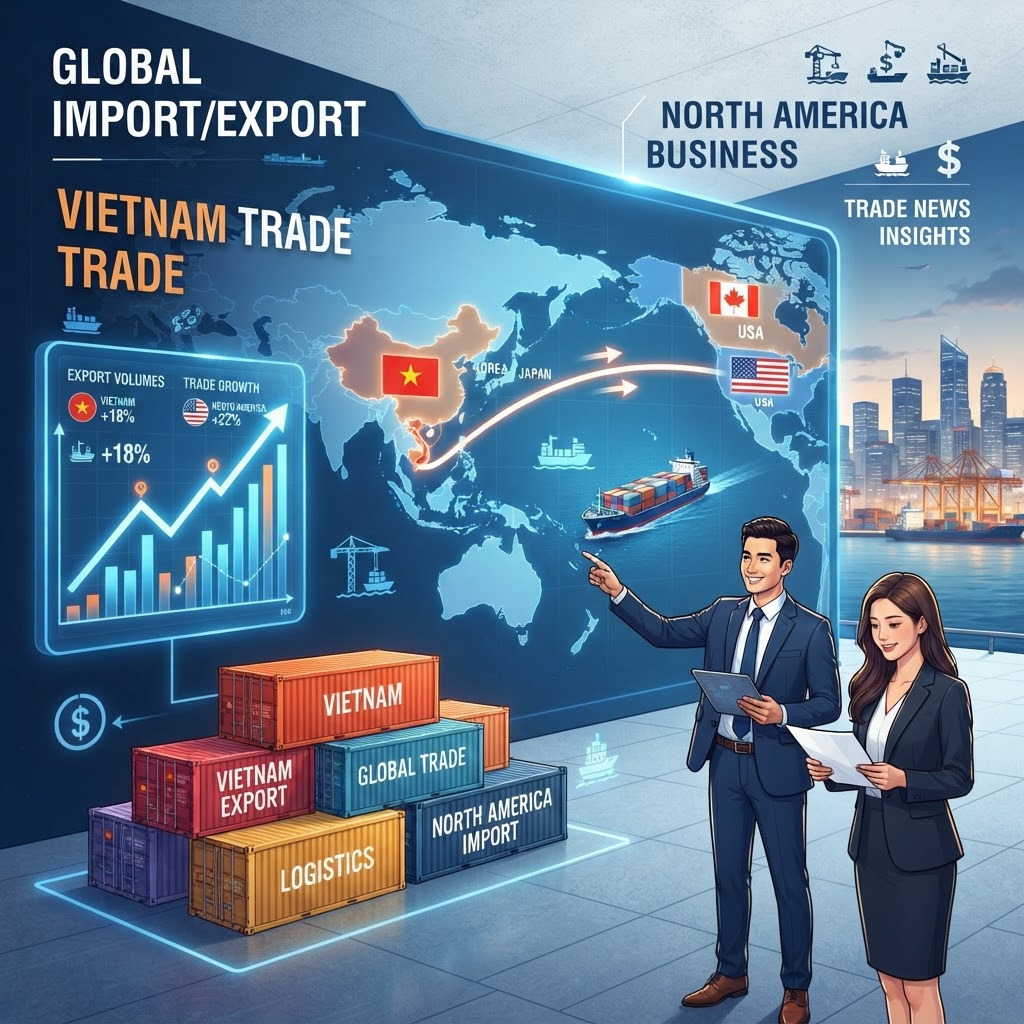
The global trade environment in 2026 is characterized by both robust expansion and significant structural challenges. As supply chains continue to reconfigure, nations like Vietnam have emerged as vital hubs in the global manufacturing network. However, as recent data indicates, achieving volume growth does not always equate to a healthy balance of trade. For trade professionals and supply chain managers, the current landscape requires a sophisticated understanding of how national deficits, bilateral agreements, and geopolitical volatility intersect to impact the movement of goods. By mid-September 2026, Vietnam’s total foreign trade surged past the US$825 billion mark, a testament to its pivotal role in international commerce. Yet, this milestone is accompanied by a widening trade deficit. The acceleration of imports—driven largely by the demand for energy and high-tech components like semiconductors—highlights the country's deepening integration into advanced manufacturing. While exports remain strong, the faster pace of import growth suggests that domestic industries are becoming increasingly dependent on foreign inputs to fuel their output. This trend warrants close monitoring by businesses sourcing from the region, as domestic industrial costs may fluctuate based on global commodity prices and import tariff policies. Concurrently, the North American trade corridor is experiencing a period of intense instability. The relationship between the U.S. and Canada, once a hallmark of stable integration, has been severely tested by the cessation of trade talks and the subsequent imposition of retaliatory steel tariffs. For companies relying on North American manufacturing, this climate of uncertainty introduces risks to both pricing and lead times. When major economies shift from cooperation to protectionism, the ripple effects are felt across logistics networks, necessitating more agile and diversified sourcing strategies. Despite these regional tensions, Vietnam remains a bright spot in Canada’s international strategy. With bilateral trade reaching 8.6 billion USD in 2025—doubling in just four years—the deepening partnership between Ottawa and Hanoi offers a potential roadmap for trade diversification. As Vietnam cements its status as Canada’s largest partner in ASEAN, businesses should look toward these corridors to mitigate the impact of North American trade stagnation. The U.S. remains a primary market for Vietnamese goods, with 2025 trade volumes hitting $209.5 billion, but the threat of new U.S. tariffs looms large. Navigating this environment demands a proactive approach: diversifying supplier bases, conducting rigorous risk assessments on import-heavy manufacturing, and staying abreast of the rapid policy shifts occurring in Washington, Ottawa, and Hanoi. As we move toward the final quarter of 2026, the key for trade professionals is to treat these volatility markers not as insurmountable obstacles, but as signals to refine their operational strategies and strengthen regional alliances. Key News Sources: Vietnam trade tops US$825 billion by mid-September (https://english.vov.vn/en/economy/vietnam-trade-tops-us825-billion-by-mid-september-trade-deficit-widens-post1334476.vov); Vietnam posts record trade deficit as US renews tariff risks (https://sg.finance.yahoo.com/news/vietnam-posts-record-trade-deficit-220639637.html); U.S. goods trade with Vietnam totaled an estimated $209.5 billion in 2025 (https://ustr.gov/countries-regions/southeast-asia-pacific/vietnam); Vietnam, Canada seek broader trade cooperation (https://en.vietnamplus.vn/vietnam-canada-seek-broader-trade-cooperation-post342602.vnp); Canada retaliates against U.S. steel imports (https://www.nbcnews.com/business/economy/trump-terminates-ends-canada-trade-talks-tariffs-rcna215608). In conclusion, the current trade environment is a study in contrasts. While Vietnam continues to see explosive growth in trade volume, its struggle with import-driven deficits serves as a reminder of the complexities of modern manufacturing. When viewed alongside the escalating tensions in North American trade, it becomes clear that geopolitical risk management must now be at the forefront of every supply chain strategy. Professionals who leverage emerging partnerships in the ASEAN region while maintaining visibility into the shifting tariff policies of major global powers will be best positioned to thrive in this uncertain era.
Key News Sources
-
Vietnam trade tops US$825 billion by mid-September, trade deficit widens (VOV) Vietnam's foreign trade has expanded rapidly, reaching over US$825 billion by mid-September 2026. However, the trade balance is increasingly tilting toward imports, which are growing at a faster pace than exports.
-
Vietnam posts record trade deficit as US renews tariff risks (Bloomberg) Vietnam's trade deficit hit a record high of US$5.21 billion in May 2026 due to surging import costs for energy and semiconductors. Meanwhile, exporters are preparing for potential new tariffs from the United States.
-
U.S. goods trade with Vietnam totaled an estimated $209.5 billion in 2025 (United States Trade Representative) Bilateral trade between the U.S. and Vietnam has grown significantly, reaching $209.5 billion in goods trade in 2025. The U.S. remains Vietnam's largest export market, though the U.S. maintains a substantial trade deficit with the country.
-
Vietnam, Canada seek broader trade cooperation (VietnamPlus) Vietnam and Canada have agreed to strengthen economic ties, with bilateral trade doubling over the past four years to reach 8.6 billion USD in 2025. Canada is currently one of Vietnam's key trading partners in the Americas, while Vietnam is Canada's largest partner in ASEAN.
-
Canada retaliates against U.S. steel imports after Trump terminates trade talks (NBC News) Trade tensions between Canada and the U.S. have escalated following the termination of trade discussions by the U.S. administration. In response, Canada has moved to implement retaliatory measures against U.S. steel imports.
Last updated: October 1, 2026