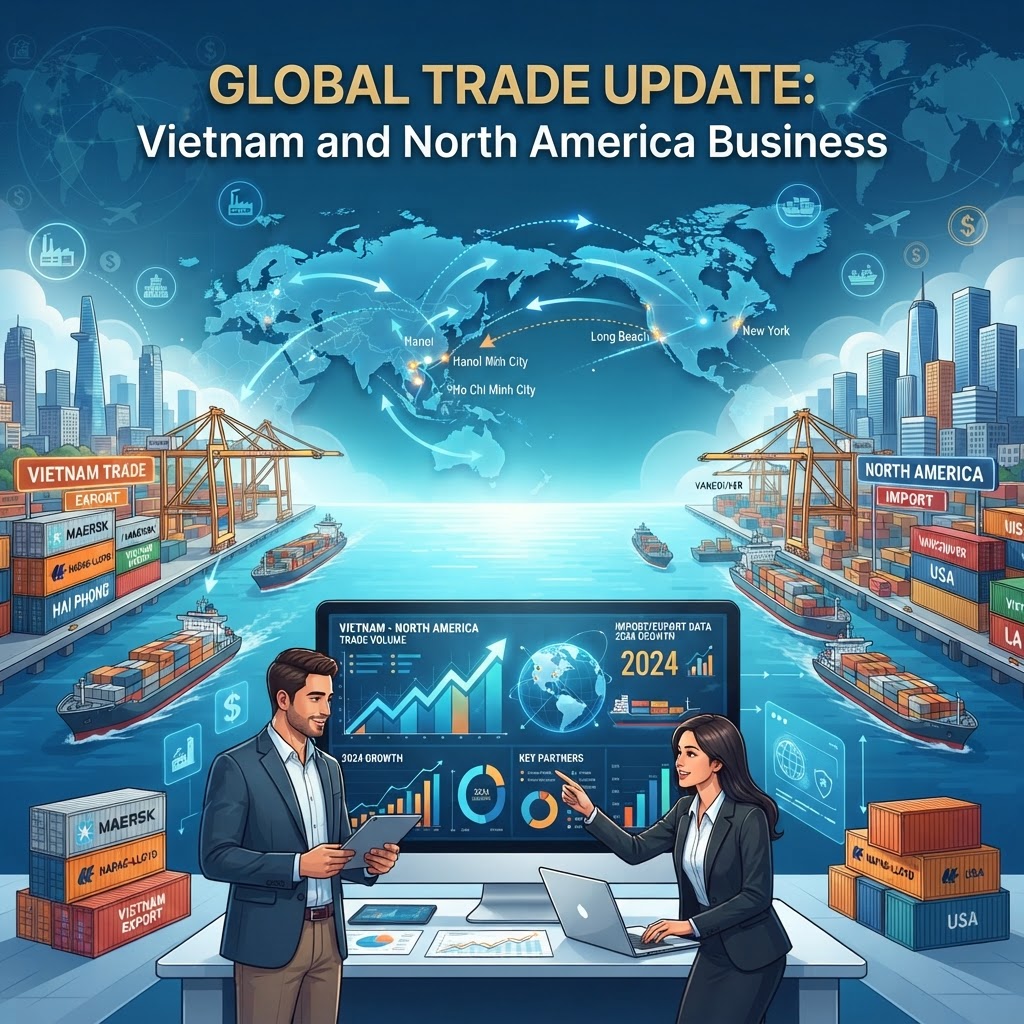
Navigating Global Trade Shifts: Vietnam’s Rise and North American Volatility
A deep dive into shifting trade dynamics as Vietnam records historic GDP growth while North American partners navigate a complex cycle of tariff disputes and trade agreements.
The global trading landscape in 2026 is defined by a paradoxical mix of unprecedented economic expansion and strategic protectionism. As traditional manufacturing hubs reconfigure their supply chains, nations like Vietnam have emerged as vital pivots in the global economy, demonstrating remarkable resilience and growth. Simultaneously, the North American trade corridor remains a theater of high-stakes negotiations, where bilateral agreements are frequently tested by retaliatory measures and sector-specific friction. For trade professionals, navigating this environment requires a balance of optimism for new market access and vigilance regarding regulatory hurdles. ### The Vietnamese Economic Surge Vietnam’s recent performance is a testament to the country’s deepening integration into the global market. With quarterly GDP growth hitting its highest level in four years, the nation is solidifying its role as a key manufacturing and export powerhouse. Data from the first nine months of 2026 reveals a high-velocity trade environment, characterized by a 24.5% rise in exports totaling $434.30 billion. While import volumes have surged by 36.7% to $453.72 billion, this deficit underscores the rapid expansion of Vietnam's industrial base, which relies heavily on imported raw materials and intermediate goods. Beyond domestic performance, Vietnam is actively engaging in high-level diplomacy to secure its future. The country is not only closing in on a reciprocal trade agreement with the United States—aiming to balance bilateral commerce—but is also strengthening its ties with Canada through ongoing discussions regarding the ASEAN–Canada Free Trade Agreement (ACAFTA). These moves suggest a deliberate strategy to diversify trade partners and reduce reliance on any single market. ### Navigating North American Trade Friction In contrast to the optimistic growth trends in Southeast Asia, the trade environment between the United States and Canada has been marked by a complex cycle of escalation and reconciliation. The year has seen a 'tit-for-tat' dynamic, where retaliatory surtaxes and import prohibitions have frequently disrupted supply chains and strained cross-border relations. However, the recurring threat of tariffs has also acted as a catalyst for deeper negotiations. Recent reports indicate that both nations have made significant strides toward new agreements designed to safeguard North American manufacturing and energy sectors. The lesson for supply chain managers is clear: geographic proximity does not guarantee policy stability. The volatile nature of these negotiations highlights the need for adaptive logistics strategies that can account for sudden shifts in tariff structures. ### Actionable Insights and Regulatory Risks While opportunities for growth are abundant, they are rarely without friction. The U.S. International Trade Commission’s decision to impose antidumping duties on polypropylene corrugated boxes from Vietnam serves as a cautionary tale for exporters: even in growing bilateral relationships, specific sectors remain subject to intense scrutiny if domestic industries claim material injury. Professionals must prioritize compliance and monitor 'anti-dumping' signals closely to mitigate financial risk. As we head into the final quarter of 2026, the focus must shift from purely volume-based growth to strategic partnership maintenance. Diversification, coupled with a robust understanding of both local trade policy and international regulatory standards, will be the differentiator for successful global trade enterprises. ### Key News Sources 1. Vietnam's quarterly GDP grows fastest in 4 years 2. Vietnam, US close to reaching reciprocal trade agreement 3. Canada, U.S. both say they made gains in new trade deal that averted tariffs 4. The Trade War Tit-for-tat Continues: United States Responds to Canada's Retaliatory Surtaxes 5. Vietnam, Canada seek broader trade cooperation 6. Polypropylene Corrugated Boxes from Vietnam Injure U.S. Industry, Says USITC ### Conclusion The global trade environment is currently defined by a race to build resilient supply chains amidst shifting political winds. Vietnam remains a bright spot, leveraging its export prowess to forge stronger global alliances, while North America continues to refine its domestic protections through intense negotiation. For stakeholders, success will be determined by the ability to remain agile, informed, and compliant in an increasingly complex regulatory landscape.
Key News Sources
-
Vietnam's quarterly GDP grows fastest in 4 years (Reuters) Vietnam's economy has shown strong momentum with quarterly GDP growth reaching its highest level in four years. During the first nine months of 2026, the country's exports rose by 24.5% to $434.30 billion, while imports increased by 36.7% to $453.72 billion.
-
Vietnam, US close to reaching reciprocal trade agreement (VnExpress International) Negotiating teams from the U.S. and Vietnam are nearing a final outcome for a reciprocal trade agreement. U.S. Trade Representative Ambassador Jamieson Greer noted substantial progress in the talks, which aim to balance bilateral trade and create more opportunities for businesses in both nations.
-
Canada, U.S. both say they made gains in new trade deal that averted tariffs (iPolitics) Canada and the U.S. have reached a new trade agreement that successfully averted potential tariffs. U.S. Trade Representative Jamieson Greer expressed confidence that the deal will protect American jobs and strengthen the North American manufacturing and energy sectors.
-
The Trade War Tit-for-tat Continues: United States Responds to Canada's Retaliatory Surtaxes (Mondaq) Canada and the United States have escalated their trade tensions with new retaliatory tariffs and import prohibitions that took effect in September 2026. The measures have created a complex environment for cross-border commerce as both nations respond to each other's trade policies.
-
Vietnam, Canada seek broader trade cooperation (VietnamPlus) Vietnam and Canada have agreed to strengthen economic ties and supply chain connectivity to navigate global trade uncertainties. The discussions included progress on the ASEAN–Canada Free Trade Agreement (ACAFTA) and emphasized the importance of a rules-based multilateral trading system.
-
Polypropylene Corrugated Boxes from Vietnam Injure U.S. Industry, Says USITC (United States International Trade Commission) The U.S. International Trade Commission determined that the U.S. industry is being materially injured by imports of polypropylene corrugated boxes from Vietnam sold at less than fair value. Consequently, the U.S. Department of Commerce will issue an antidumping duty order on these products.
Last updated: October 5, 2026