Navigating the New Trade Paradigm: Volatility, Realignment, and Strategic Outlook
As global trade enters a period of heightened uncertainty, businesses must adapt to shifting geopolitical dynamics, regional supply chain adjustments, and evolving tariff policies. This analysis explores the current state of international commerce, with a specific focus on the Pacific and North American corridors.
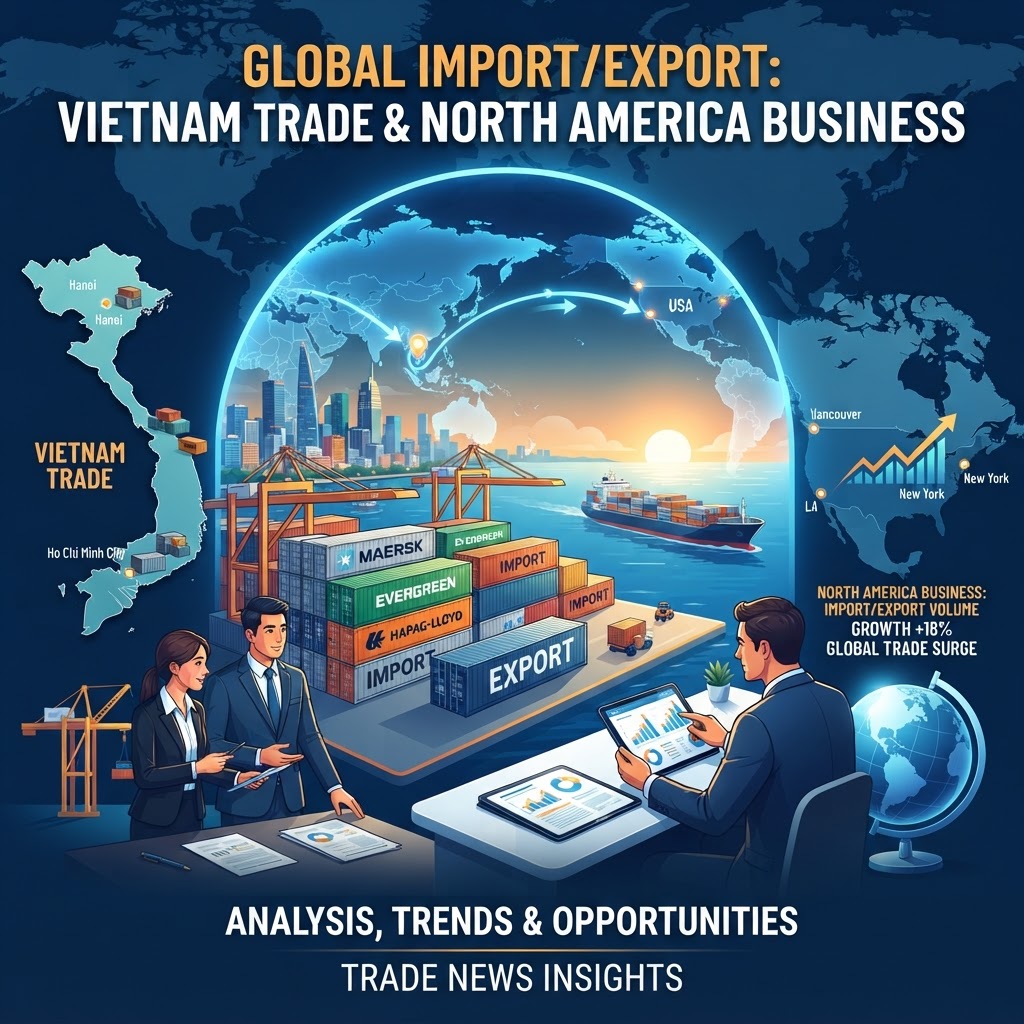
The global trade landscape in late 2026 is defined by a dichotomy: while deep integration continues to drive record-breaking trade volumes, geopolitical friction and protectionist measures are creating significant hurdles for multinational logistics. For trade professionals, navigating this environment requires a shift from efficiency-only models toward resilience and compliance-heavy strategies. The ongoing volatility in key corridors, from the Strait of Hormuz to the North American border, underscores the necessity of constant monitoring and agile supply chain management. In this post, we explore how major players like Vietnam and the North American bloc are recalibrating their strategies amid a sea of trade uncertainty. Vietnam has emerged as a cornerstone of global manufacturing, yet it faces the double-edged sword of success: rapid export growth alongside a surging trade deficit. The 2025 data, showing a $133.89 billion surplus with the United States, highlights the depth of this partnership. However, as of mid-2026, the country is grappling with a $5.21 billion record trade deficit driven by rising input costs and raw material pressure. More critically, the shadow of potential US investigations into forced-labor practices looms over Vietnamese exporters. This creates an immediate need for businesses to tighten their supply chain audits and ensure full ESG transparency. For the US-Vietnam relationship, the outlook remains strong, but companies must be prepared for increased regulatory scrutiny. Simultaneously, the North American trade theater is undergoing a period of intense turbulence. The tit-for-tat tariff escalation between the United States and Canada, which intensified in September 2026, serves as a stark reminder that even mature trade partnerships are susceptible to rapid policy shifts. The introduction of retaliatory surtaxes and import prohibitions has introduced a layer of complexity for cross-border logistics that was largely absent just a year ago. Companies operating within the CUSMA framework must now move beyond traditional logistics and invest heavily in trade compliance, mapping out alternative procurement routes to avoid newly sanctioned goods. On a broader front, Vietnam is hedging against trade isolation by deepening ties with other middle powers. The ongoing negotiations for an ASEAN–Canada Free Trade Agreement (ACAFTA) illustrate a pivot toward broader diversification. By linking up with secondary markets, nations are attempting to build a buffer against the bilateral volatility seen between larger superpowers. For trade professionals, this means that the map of global commerce is not shrinking, but it is becoming increasingly fragmented. The focus must now shift to regional hubs that offer both connectivity and political stability. To succeed in the coming months, firms should prioritize digital tracking tools to mitigate disruption risks and maintain a flexible procurement strategy that can shift in response to sudden tariff announcements. The era of 'business as usual' is over; the era of 'strategic agility' has arrived. Key News Sources: The state of play for global trade (https://www.piie.com/event-series/trade-winds); Vietnam posts record trade deficit (https://sg.finance.yahoo.com/news/vietnam-posts-record-trade-deficit-220639637.html); Vietnam–US trade relations 2025 (https://asemconnectvietnam.gov.vn/default.aspx?ZID1=8&ID8=146782&ID1=2); Vietnam-Canada cooperation (https://en.vietnamplus.vn/vietnam-canada-seek-broader-trade-cooperation-post342602.vnp); US-Canada trade war escalation (https://www.mondaq.com/canada/export-controls-trade-investment-sanctions/1841846/the-trade-war-tit-for-tat-continues-united-states-responds-to-canadas-retaliatory-surtaxes-with-new-tariffs-and-import-prohibitions). In conclusion, while the macro-indicators show a resilient global economy, the micro-level realities are fraught with friction. Success in the latter half of 2026 and into 2027 will not necessarily go to the firm with the lowest cost, but to the one with the most robust regulatory compliance and the most geographically diversified supply chain. Stay informed, remain flexible, and treat compliance as a core business function.
Key News Sources
-
The state of play for global trade: Spotting trends and challenges (PIIE) Experts from the Peterson Institute for International Economics and other global organizations discuss the current landscape of international trade. The series covers critical topics including the impact of shipping disruptions in the Strait of Hormuz and the progress of major regional trade agreements.
-
Vietnam posts record trade deficit as US renews tariff risks (Bloomberg) Vietnam's trade deficit reached a record high of $5.21 billion in May 2026 due to surging raw material costs and global supply chain pressures. Exporters are also facing uncertainty regarding potential new US tariffs related to forced-labor practice investigations.
-
Vietnam–United States trade relations in 2025: Trade surplus of USD133.89 billion (AsemconnectVietnam) Two-way trade between Vietnam and the United States reached $153.18 billion in 2025, marking a 13.78% increase from the previous year. Vietnam maintained a significant trade surplus with the US, which remains its largest export market.
-
Vietnam, Canada seek broader trade cooperation (VietnamPlus) Vietnam and Canada are working to strengthen economic ties and supply chain connectivity amid global trade volatility. The two nations are currently discussing negotiations for the ASEAN–Canada Free Trade Agreement (ACAFTA).
-
The Trade War Tit-for-tat Continues: United States Responds to Canada's Retaliatory Surtaxes with New Tariffs and Import Prohibitions (Mondaq) Canada and the United States have escalated trade tensions with new retaliatory tariffs and import prohibitions that took effect in September 2026. The measures have created a complex environment for cross-border commerce between the two nations.
Last updated: October 8, 2026